Tech News Roundup: SK Hynix Sees Memory Shortages Through 2030, Oracle Gets Google's TPUs, xAI Buys Out Data Center Neighbors & More (Oct 28, 2026)

SK Hynix (image via CNBC)
SK Hynix says the memory crunch behind rising PC and phone prices will last through 2030, Oracle becomes the first cloud outside Google to rent out its TPUs, and xAI is offering to buy out neighbors of its Mississippi data center. Plus Amazon Leo's Globalstar deal, another MacBook Neo student price bump, Samsung's clip-on Galaxy Buds On, TikTok's restaurant guide, Meta's AI pet game, Kodiak's first driverless truck sale, Virgin Galactic's Apeiron, an AI-driven breach at 123 Reg, Cisco's rogue-agent detector, a $60 million supercomputer on eBay, China's spaceplane photo and new Firefox AI tricks. Here's the Lanbrew tech roundup for October 28, 2026.
SK Hynix posts a record quarter and says memory shortages will last through 2030
If you were hoping RAM and SSD prices would cool off soon, SK Hynix has bad news. The Korean memory giant told investors that demand will keep outrunning supply through at least 2030, because cutting-edge chips are hard to make and new fabs take years to build, The Register reports. About 14 big customers have locked in more than half of its output for 2027 and 2028, and those deals still let prices move with the market. 9to5Mac notes Apple is believed to be one of them.
The shortage is great for SK Hynix itself. Revenue hit a record ₩104.6 trillion (about $78 billion), up 328% from a year ago, and the company announced roughly ₩100 trillion in dividends and buybacks. CNBC says the stock jumped almost 11% in Seoul. SK Hynix also paused IPO plans for its US flash unit Solidigm, which, according to a Bloomberg report covered by Tom's Hardware, is in talks about a $45 billion new US factory if it's allowed to send equipment to upgrade its plant in Dalian, China.
Sources: The Register, CNBC, 9to5Mac, Tom's Hardware

Google Cloud (image via CNBC)
Oracle will rent out Google's TPUs, the first cloud outside Google to do it
Google's custom AI chips are leaving home. Oracle says it will offer Google's tensor processing units on Oracle Cloud starting in 2027, making it the first big cloud outside Google to carry them, The Register reports. Oracle is pitching it as more choice for customers, and it also gives Oracle a way to lean a little less on Nvidia.
CNBC says it's a real change in strategy for Google, which used to sell its chips, models and cloud as one package. Analysts' TPU forecasts are all over the place but all point up: TD Cowen models $62.5 billion in TPU sales for 2027, and Wells Fargo expects about $99 billion. Alphabet reports earnings later today.
Sources: CNBC, The Register

xAI's Southaven site (image via The Verge)
xAI is offering to buy neighbors' homes if they drop data center claims
An xAI subsidiary called MZX is offering to buy homes near its data center and power plant in Southaven, Mississippi, but there's a condition: sellers have to release any claims tied to a lawsuit over the site, The Verge reports, citing The Guardian and the Mississippi Free Press. A realtor reportedly told one resident the company wants to buy 418 homes, and 18 owners have already agreed to sell.
A letter sent to households says MZX denies the allegations in the suit but needs the land for its business. Renters in the area say they're already being told to move out with 60 days' notice after their landlords agreed to sell.
Source: The Verge

Amazon Leo (image via Engadget)
Amazon Leo gets the green light to buy Globalstar
The FCC has approved Amazon Leo's $11.5 billion purchase of Globalstar, Engadget reports. You might not know the name, but Globalstar runs the satellite emergency features on iPhones and Apple Watches, and under the deal Leo will take over powering those services. Apple held about a 20% stake in Globalstar before the takeover.
The deal gives Leo, Amazon's answer to Starlink, a fast path into direct-to-phone service. Leo has about 400 satellites up now and is aiming for more than 3,000, still far behind SpaceX's roughly 11,000.
Source: Engadget

MacBook Neo (image via The Verge)
The MacBook Neo's student price climbs again, now $649
Apple's cheapest MacBook keeps getting less cheap. The MacBook Neo now starts at $649 on Apple's Education Store, $150 more than its original $499 student price, after another $50 bump this week, The Verge reports. That leaves students saving just $50 off the regular $699 price instead of the usual $100.
The base model still has 8GB of RAM, 256GB of storage and no Touch ID. Like a lot of recent price hikes, this one ties back to RAM and component shortages, which fits right in with SK Hynix's warning above.
Source: The Verge

Galaxy Buds On (image via Engadget)
Samsung's Galaxy Buds On are clip-on, open-ear earbuds for $229
Samsung is joining Sony, Bose and Sennheiser in the clip-on, open-ear earbud game. The Galaxy Buds On wrap around your ear instead of sealing the canal, and Samsung says its new Audio Leakage Reduction tech cuts down how much sound spills out to people nearby, Engadget reports.
You get about 9.5 hours of playback per charge (38 hours with the case), IP54 water resistance, three mics plus a voice pickup sensor for calls, and head gestures: nod to answer a call, shake to decline. They launch in early November for $229.
Source: Engadget

TikTok's Must Eat (image via The Verge)
TikTok takes on Yelp with a built-in restaurant guide
TikTok already makes restaurants go viral. Now it wants to be where you look them up, too. Its new Must Eat section is built from 40 million TikTok posts, reviews and comments about food, and lets you leave reviews, call or book a table, and find spots on a map, The Verge reports.
The guide splits places into "everyday eats" and "elevated dining," with filters for rating, distance, cuisine and what's open now. Each restaurant page links to TikTok videos about it, which puts the app in direct competition with Yelp and Google Maps.
Source: The Verge

Waddle World (image via Engadget)
Meta quietly launches Waddle World, a Tamagotchi with an AI brain
Meta has a new AI pet game called Waddle World, Engadget reports. You hatch an egg, feed and play with your pet, and write or dictate journal entries to it. The pet writes back with Meta's AI and draws a little doodle for each entry. Meta calls it a "daily journal disguised as a pet."
There are mini-games to earn food and toys, like stacking groceries on your pet's head. For now it's only out in the Philippines, which looks like a test run before a wider launch.
Source: Engadget

Kodiak and DTL Transport (image via TechCrunch)
Kodiak signs its first deal to sell driverless trucks for highways
Self-driving truck company Kodiak AI will deliver 75 driverless big rigs to DTL Transport starting in 2028, TechCrunch reports. It's Kodiak's first binding deal to supply trucks that will run without a driver on public highways, starting with Dallas to El Paso and Dallas to Atlanta.
Kodiak plans to pull safety drivers out of the cab in December for an Ikea freight run on I-45 between Dallas and Houston. The deal is a needed win: Kodiak's stock is down 87% from its first trading day.
Source: TechCrunch

Apeiron (image via The Verge)
Meet Apeiron, Virgin Galactic's next spaceship
Virgin Galactic showed off Apeiron, the first of its new Delta-class spaceships, named through a public poll, The Verge reports. It's flying today under its Eve carrier plane from Arizona to Spaceport America in New Mexico, where the team will finish avionics software testing before flight tests start.
Don't book a seat just yet. The company pushed its first commercial flight back again, now to early Q2 2027, with a second ship following in mid-2027. Virgin Galactic hasn't flown a paying customer since it retired VSS Unity in June 2024.
Source: The Verge

Image via The Register
UK registrar 123 Reg says an AI-driven attack exposed customer data
Domain registrar 123 Reg is telling customers that a September 18 break-in exposed names, phone numbers, VAT numbers, account details and marketing preferences, The Register reports. The company calls it "the first known AI-driven cyberattack" against it.
123 Reg says the attackers' servers were hosted in China and Singapore and held AI attack "skills," including copies of tools Anthropic open sourced. It suspects the same China-linked group that has used Claude Code against other targets and recently hit several South Korean financial firms.
Source: The Register

Image via The Register
Cisco open sources Project Quarry to catch AI agents going rogue
Cisco has open sourced Project Quarry, an engine that watches what AI agents do across a whole session to spot when they've gone off the rails, The Register reports. Cisco hopes it becomes a shared standard for agent behavior, the way its Snort tool is for network attacks.
The idea is that one action rarely looks bad on its own. Reading a config file is fine, and so is calling an outside server, but doing both in a row can be data theft. Cisco's Amy Chang compared it to credit card fraud detection, where the pattern is what gives it away.
Source: The Register
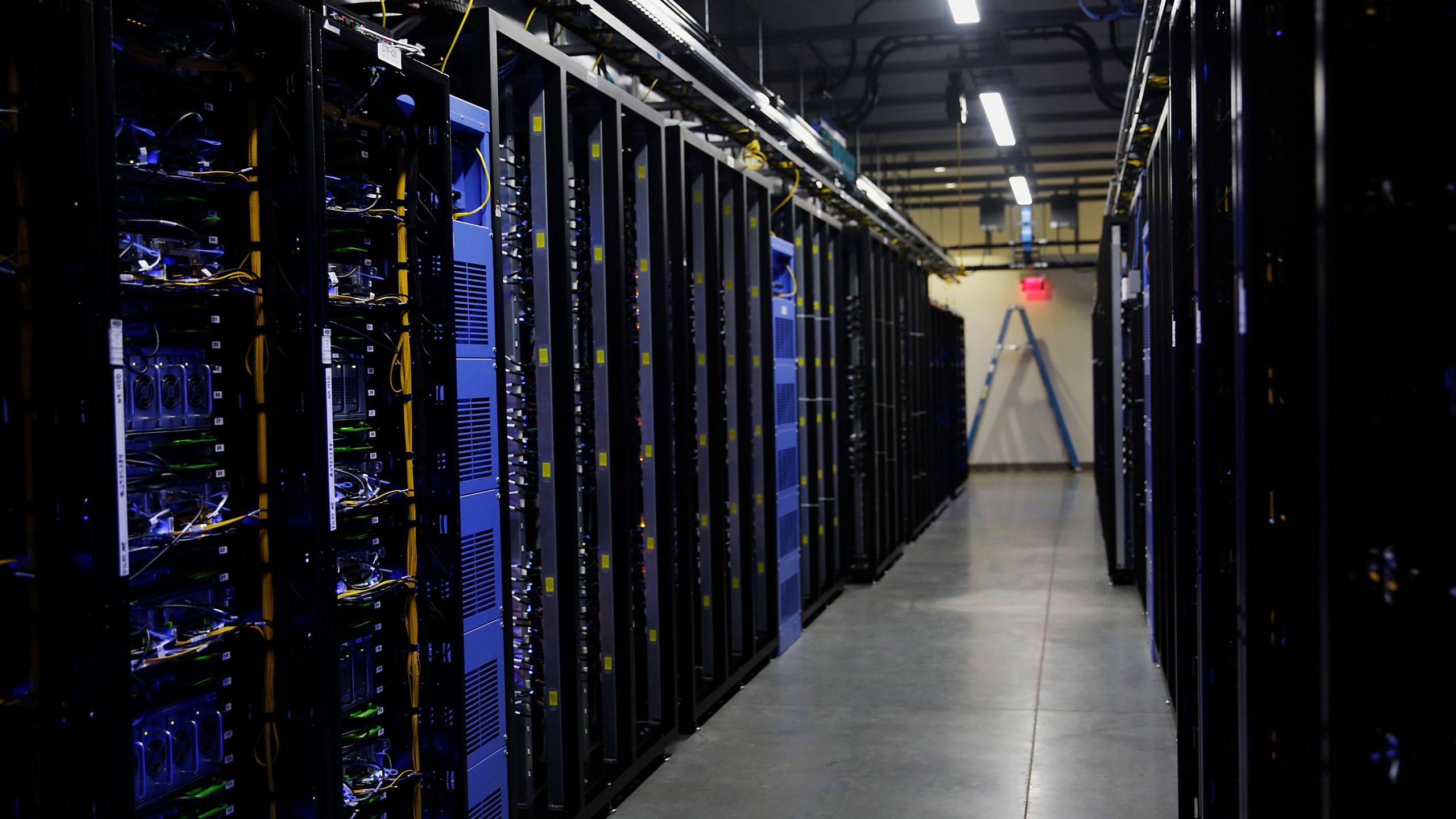
Image via Tom's Hardware
Someone listed a $60 million AI supercomputer on eBay, with free shipping
Need a data center? IT reseller Core 4 Solutions has listed a 300-rack AI cluster on eBay for $59.7 million, Tom's Hardware reports. It comes with 9,600 Nvidia A100 GPUs and 4,200 AMD EPYC 64-core CPUs pulled from service.
Shipping is free with FedEx Ground, or $50 for overnight. You'll just need a lot of floor space and a very serious power hookup.
Source: Tom's Hardware

China's spaceplane in orbit (image via Ars Technica)
The first clear photo of China's secretive spaceplane
A sharp image of China's robotic spaceplane, taken in orbit in 2024 by a commercial imaging satellite then owned by Maxar, has finally been released in a US Defense Intelligence Agency report, Ars Technica reports. It shows delta wings, payload bay doors and a solar-powered service module, and it looks a lot like the US Space Force's X-37B.
China has flown four spaceplane missions since 2020, lasting up to nine months, and the fourth has been in orbit since February. Very little is public about what it actually does up there.
Source: Ars Technica
Firefox Smart Window (image via 9to5Mac)
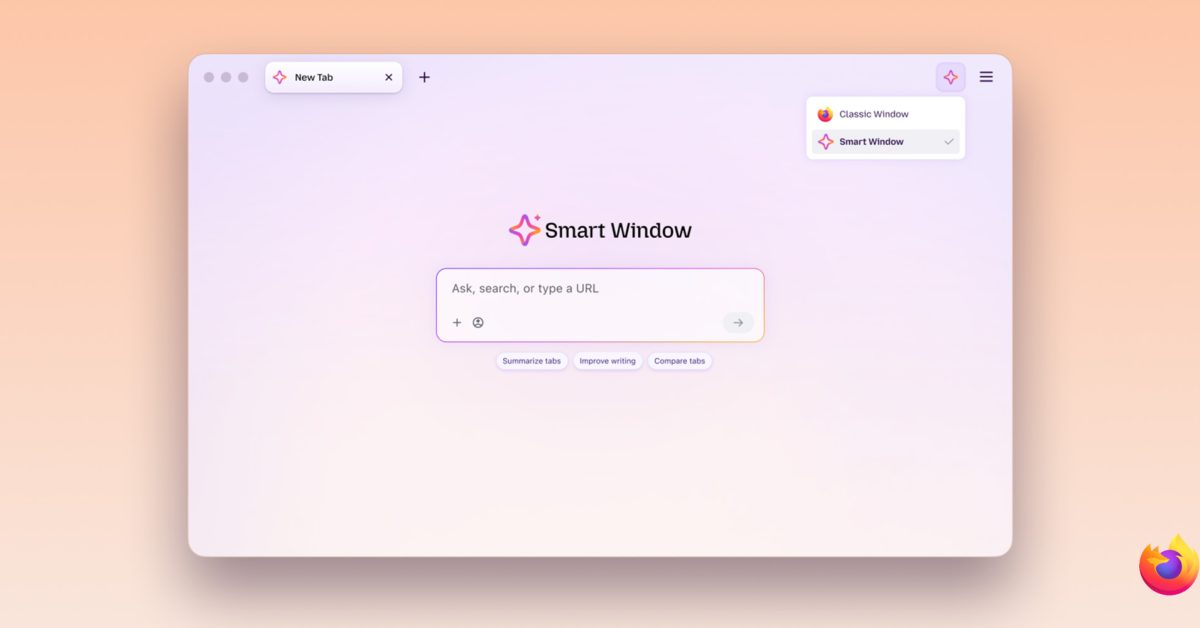
Firefox's Smart Window can now fill out forms and watch websites for you
Mozilla added two AI features to Smart Window, the opt-in AI browsing mode in Firefox, 9to5Mac reports. The new form filler can pull details from your other open tabs to answer things like work history questions, and website monitoring alerts you when a page changes.
One thing to know: form filling uses Google's Gemini 3.1 Flash Lite, so information from the tabs you pick is sent to that model. Both features are rolling out to Smart Window beta users now.
Source: 9to5Mac
Lanbrew rounds up the day's biggest tech stories. Every story above links to the original reporting, so click through to support the outlets doing the work.
Comments
Post a Comment