Tech News Roundup: S&P Turns Negative on Meta's AI Spending, AI Giants Back One Scraping Opt-Out, New Malware Uses AI to 'Autodox' Victims & More (Oct 31, 2026)

Meta (image via CNBC)
S&P turned its outlook on Meta negative over its AI spending, and Google, OpenAI, Anthropic and Microsoft are backing one simple robots.txt signal to opt out of AI training. Plus malware that uses AI to "autodox" its victims, the Amadeus airline data breach, OpenAI's smaller raise and Anthropic's possible junk rating, Reddit's worst day ever, Applebee's leaky app, a ransomware crew's $7,000 AI bill, falling payouts for renting out your Mac, the RTX 5080 vanishing from Nvidia's store, Starbucks' AI drive-thru, Dartmouth's AI disclosure scandal, a global rocket shortage, Voyager 1's brief silence and a homebrew PDP-11 RAM board. Here's the Lanbrew tech roundup for October 31, 2026.
S&P turns negative on Meta as its AI spending pushes cash flow into the red
S&P Global Ratings has cut its outlook on Meta from stable to negative, keeping the AA- rating but warning it could drop, CNBC reports. The agency pointed to "uncertainty" around Meta's huge capital spending and its negative free cash flow, and questioned "Meta's ability to monetize its AI investments" compared with rivals that are spending just as heavily. Even with the Muse AI agent and new foundation models out, S&P says "it is unclear when these revenue streams will generate material contributions that exceed their rising costs."
Meta pushed back, saying it "respectfully disagree[s]" and still sees a "very strong credit profile." The numbers behind the worry are big: Meta expects $135 billion to $145 billion in capex this year, posted negative free cash flow of $2.12 billion last quarter for the first time, and plans to raise $95 billion to fund its AI push. The stock finished October down 15%, its worst month in four years, and S&P says it's "less certain" Meta will rein in spending as soon as it once expected.
Source: CNBC

Image via The Verge
Google, OpenAI, Anthropic and Microsoft back one simple way to opt out of AI training
Website owners may soon need just one line to keep their content out of AI training. OpenAI, Google, Microsoft and Anthropic say they'll honor a new shared signal in robots.txt, the file that has long told crawlers what they can and can't scrape, The Verge reports. Right now sites have to block each AI company's crawler one by one. The proposal, written by Anthropic standards lead Kevin Kelley and under consideration at the IETF, lets publishers set a single AI-training preference that all of them respect.
Engadget explains how it works: sites add a special "__usage_ai-training" user agent with Disallow and Allow rules, so you could block training on everything except, say, a press kit. It doesn't stop normal search crawling, and Google will treat it as a stop sign for its Google-Extended crawler that gathers Gemini training data. The catch is that it only works going forward. Anything these companies already scraped stays scraped.

Image via Wired
Spooky new malware uses AI to "autodox" the people it infects
Cisco Talos researchers have found a new infostealer that hands its loot to AI to size up victims, Wired reports. Called "Volta-Autodoxer" after the name it uses internally, it grabs the usual stuff, like saved browser passwords, cookies, Microsoft login tokens, payment cards and crypto wallet seed phrases, plus active Discord, Telegram, Steam and Roblox sessions. Then it digs deeper through things like your Gmail, receipts and food delivery order history to work out where you live and what your habits are.
Next it packages everything into a dossier and sends it through OpenRouter to an AI model with a prompt telling it to act like a "forensic intelligence analyst," summarizing who you are, "what they're worth" and how careful you are online. It defaults to Anthropic's Claude, with fallbacks to Moonshot's Kimi and Google's Gemini in case a model refuses. Talos says it hasn't tracked whether Volta is being used in the wild yet, but warns it puts advanced targeting within reach of less skilled attackers.
Source: Wired
Cathay Pacific (image via Reuters / CNA)
A breach at airline tech giant Amadeus hits 53,000 Cathay Pacific bookings
Cathay Pacific says a breach at Amadeus, the Spanish company whose booking tech is used by hundreds of airlines, exposed data from about 53,000 of its bookings made between August 2023 and September 2026, Reuters reports. Cathay joins Japan Airlines, which said 92,000 customers were affected earlier this week, and South Korea's Asiana Airlines.
According to Cathay, someone got in using login credentials assigned to an Amadeus system account. Most of the exposed records include booking references, names and flight details, while a smaller set may also include email addresses, phone numbers, travel documents or frequent flyer numbers. There's no sign payment info was taken. Amadeus has reset passwords and added monitoring, but hasn't said how many airlines or travelers were hit in total.
Sources: Reuters (via CNA), Cathay Pacific
OpenAI (image via Reuters / CNA)
Update: OpenAI scales its raise back to about $20 billion, and Anthropic may get a junk credit rating
Last week we covered OpenAI closing in on a round of up to $30 billion. What's changed: with tech stocks sliding, OpenAI has cut that target by $10 billion to about $20 billion and lowered its hoped-for valuation from $1.4 trillion to $1.25 trillion, Reuters reports, citing the Financial Times. Some investors trimmed their commitments, and the first close is now expected to come in under $20 billion. A UAE group including MGX is set to be the biggest backer, with Founders Fund, Coatue, Sequoia and Andreessen Horowitz also expected in.
Rival Anthropic, which filed to go public this week, is facing its own money question. TechCrunch, also citing the FT, says Blackstone now tells investors it expects Anthropic to get a "high" junk rating (the BB range) after its IPO, after previously predicting an investment-grade rating before 2027. That would make it more expensive for Anthropic to borrow for its giant compute deals. Both companies declined to comment.
Sources: Reuters (via CNA), TechCrunch

Reddit (image via CNBC)
Update: Reddit stock has its worst day ever as Google's AI search cuts its traffic
On X we posted about Reddit's plan to test making people log in to read the site. The new part is how Wall Street reacted: Reddit shares fell 29.22% on Friday, the biggest drop since it went public in 2024 and well past its previous record fall of about 21% in July, CNBC reports. Reddit actually beat estimates and grew sales 53% last quarter, but its holiday-quarter forecast of $1 billion to $1.03 billion came in under the $1.05 billion analysts wanted.
CEO Steve Huffman told CNBC that search traffic from Google went "down meaningfully in this quarter" because of AI answers in search, and said the login push is "a sign of the times." Several analysts downgraded the stock, with one noting that the search changes "highlight the problem with selling content to Google."
Source: CNBC

Image via TechCrunch
Applebee's left a database password inside its app, exposing customer data
Applebee's has fixed a flaw that let anyone get into its customer database, TechCrunch reports. UK security researcher Robert Wiggins of What Security used AI to help dig a hardcoded database password out of thousands of lines of code in the Applebee's Android app, which has more than a million downloads.
That one credential opened up registered customers' personal info, and Wiggins says it could also have let an attacker change customer data. Hardcoding a password into an app is one of the worst security mistakes there is, since anyone who downloads the app can pull it out. TechCrunch confirmed the problem itself and held the story until Applebee's said the issue was fixed.
Source: TechCrunch

Image via The Register
A ransomware crew spent $7,000 on AI, then left its whole playbook on an open server
The operator behind the new n0n extortion gang ran up more than $7,216 in AI bills using the open-source coding agent OpenCode, hooked up to 154 models from seven providers, some of them "uncensored," to write and debug hundreds of attack scripts, The Register reports. Then it left its workspace on a publicly reachable file server in Sweden, where threat intel firm SOCRadar found 1,719 files including ransomware source code and extortion tools.
The twist is that the AI didn't help them break in. Across attacks on 23 organizations in 14 countries, every intrusion SOCRadar documented used weak or stolen passwords, like stuffing credentials into FortiGate VPN portals or using an exposed AWS key. In some cases the gang also wiped data and backups, which means paying for a decryption key wouldn't even fix things. n0n has claimed 108 victims since showing up last month.
Source: The Register

Image via The Register
Renting out your Mac for AI is about to pay a lot less
Darkbloom, from Seattle's Eigen Labs, lets around 800 Mac owners rent out their GPUs to run AI prompts sent through OpenRouter and get paid for it. Its best-case estimate was up to $192 a month for an M5 Pro Mac mini running 24/7, and the median for the top 50 earners has been about $5.26 a day, The Register reports. Now the company is warning members to expect lower payouts because AI token prices keep falling.
Ramp's token price index shows Anthropic's price per million tokens dropping 77%, from $2.65 in May to $0.62 in October. "The market caught up to our price," an Eigen Labs researcher told members. Tom's Hardware runs the numbers and says a 77% drop could take that top-earner median down to about $1.23 a day. Darkbloom says it's looking at other jobs like distributed CI/CD work and new customers beyond OpenRouter.
Sources: The Register, Tom's Hardware
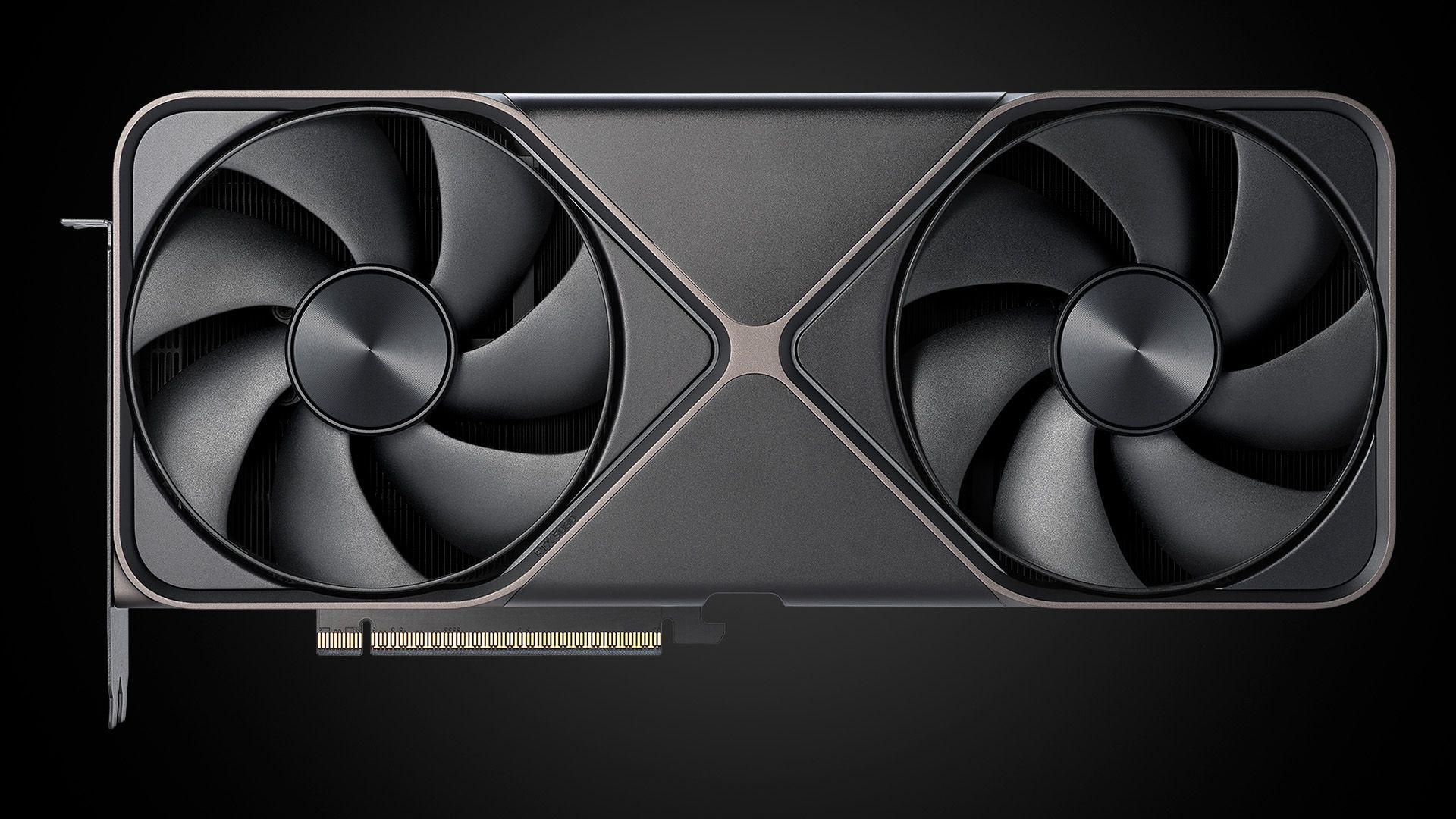
GeForce RTX 5080 (image via Tom's Hardware)
Update: Nvidia's store quietly drops the RTX 5080 as prices pass $2,199
Earlier this week we noted RTX 5080s hitting $2,000. What's new: Nvidia's own store has now removed the RTX 5080 listing entirely, following the RTX 5090, while the RTX 5070 Ti and 5070 are still listed as out of stock, Tom's Hardware reports. The cheapest RTX 5080 Tom's found in stock was $2,199.99, about 2.2 times its $999 launch price, and retailers are running low.
Nvidia hasn't said the card is discontinued, and Tom's has asked for comment. The removal adds fuel to rumors that Nvidia is shifting its top chips to pricier pro and AI cards and may replace these with an RTX 5080 24GB. Tom's thinks the RTX 5080 may be hard to find by Black Friday.
Source: Tom's Hardware

Image via The Verge
Starbucks wants its drive-thru to recognize you and show you a personalized AI menu
On its earnings call, Starbucks CEO Brian Niccol said the chain will explore drive-thru "experiences that recognize participating customers as they arrive, present personalized digital menus, and make payment more effortless," The Verge reports. Starting in 2027, it will also test AI models in the background at the drive-thru to help baristas enter orders more accurately.
Starbucks also plans AI search in its app and may eventually allow "conversational and agentic" ordering. It already takes orders through ChatGPT. It's part of a fast-food trend: Taco Bell is testing menu boards that change car by car, and McDonald's is piloting a chatbot that recognizes repeat customers and their usual order.
Source: The Verge

Image via Ars Technica
Dartmouth's provost wrote about AI cheating, then resigned over his own AI use
In August, Dartmouth provost Santiago Schnell wrote a Washington Post op-ed about universities fighting AI cheating. This week he resigned after a college committee found he didn't disclose significant AI use in an academic paper and in that same op-ed, even though the publishers required it, Ars Technica reports. The committee also cited his "insufficient cooperation," saying he didn't hand over logs from his personal AI accounts or meet with them.
Logs from his Dartmouth Claude account show him using it to review papers, fix code and edit or generate figures, and in one case asking, "Are there many signatures of AI writing in this article?" before submitting a revised draft. Schnell has said he used chatbots to refine arguments and check grammar. Dartmouth is still all in on AI, and its president says school leaders should "hold themselves to the highest standards," which Ars reads as mostly meaning disclosure.
Source: Ars Technica
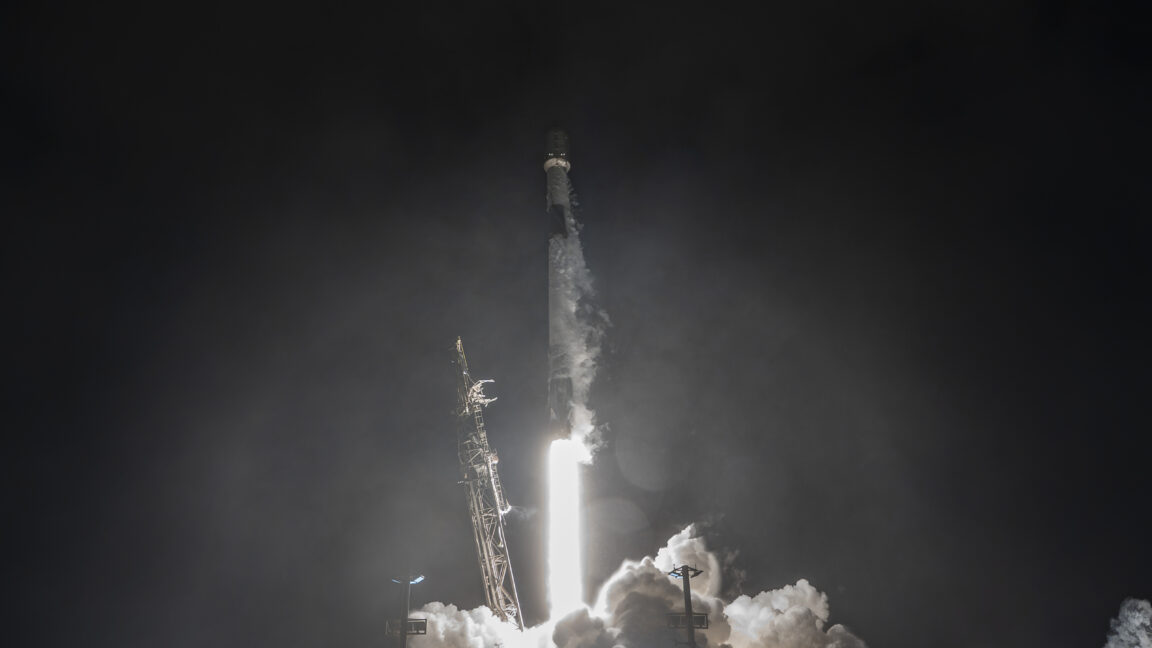
Falcon 9 (image via Ars Technica)
The world is about 150 rocket launches short, and it could last into the 2030s
A new report from analytics firm Quilty Space says that, outside China, there will be a shortfall of about 150 launches between now and 2030 compared with what satellite operators and space agencies need, Ars Technica reports. Add in rising US military demand without more Falcon flights, and the gap could double. "If you haven't booked your launch already, and you need one, you're late," Quilty's research director Caleb Henry said.
The reasons are a pileup: Russian rockets are off the Western market, Amazon's Leo constellation is soaking up launches, new rockets like New Glenn, Vulcan, Neutron and Terran R have been delayed, and Falcon 9 is retiring from commercial service. Quilty expects the crunch to peak in 2028 and might not fully ease until the late 2030s, and it sees no evidence yet that Starship will launch traditional satellites.
Source: Ars Technica
Voyager (image via The Register)
Voyager 1 went silent for two days, then phoned home
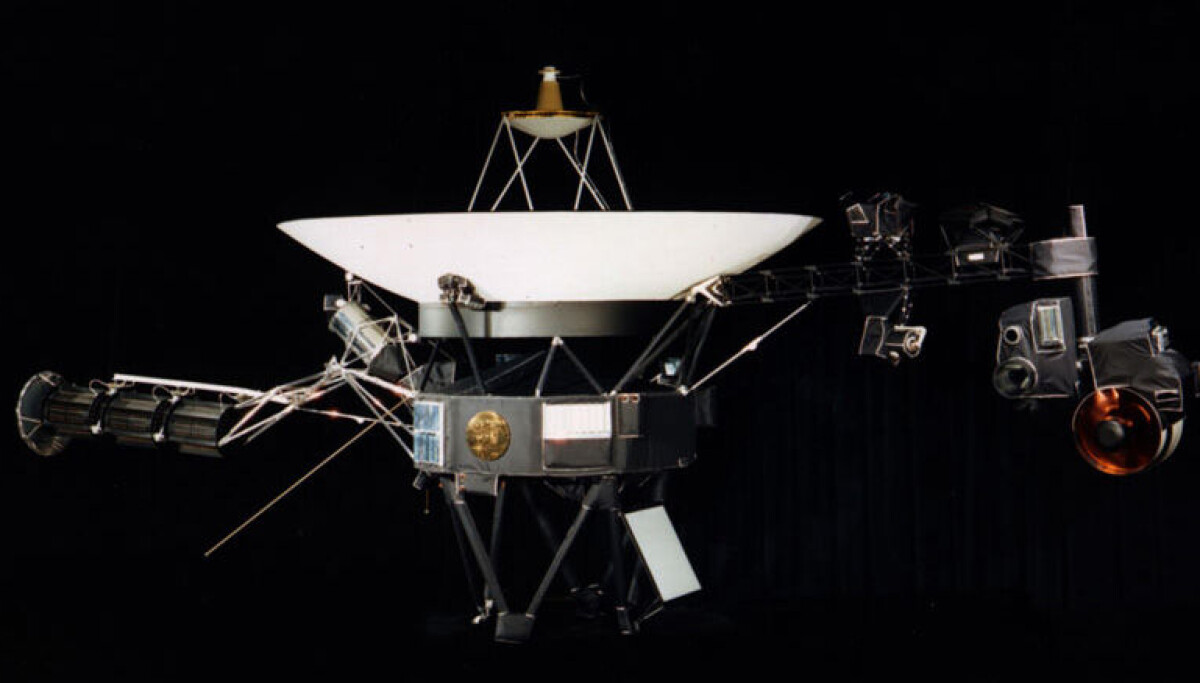
NASA got a scare this month when its Deep Space Network couldn't hear Voyager 1 on October 18 or on the next try October 19, The Register reports. On October 20 the signal came back. Early signs point to a group of thrusters going offline and backups switching on, which could mean the onboard computers spotted a problem and put the spacecraft into a safe mode.
"This is the first time we've seen the spacecraft do something like this, but we are also at a point in the mission where we have to expect the unexpected," said JPL mission manager Kareem Badaruddin. Both Voyagers turn 50 next year, and Voyager 1 is just weeks from being one light-day away from Earth.
Source: The Register
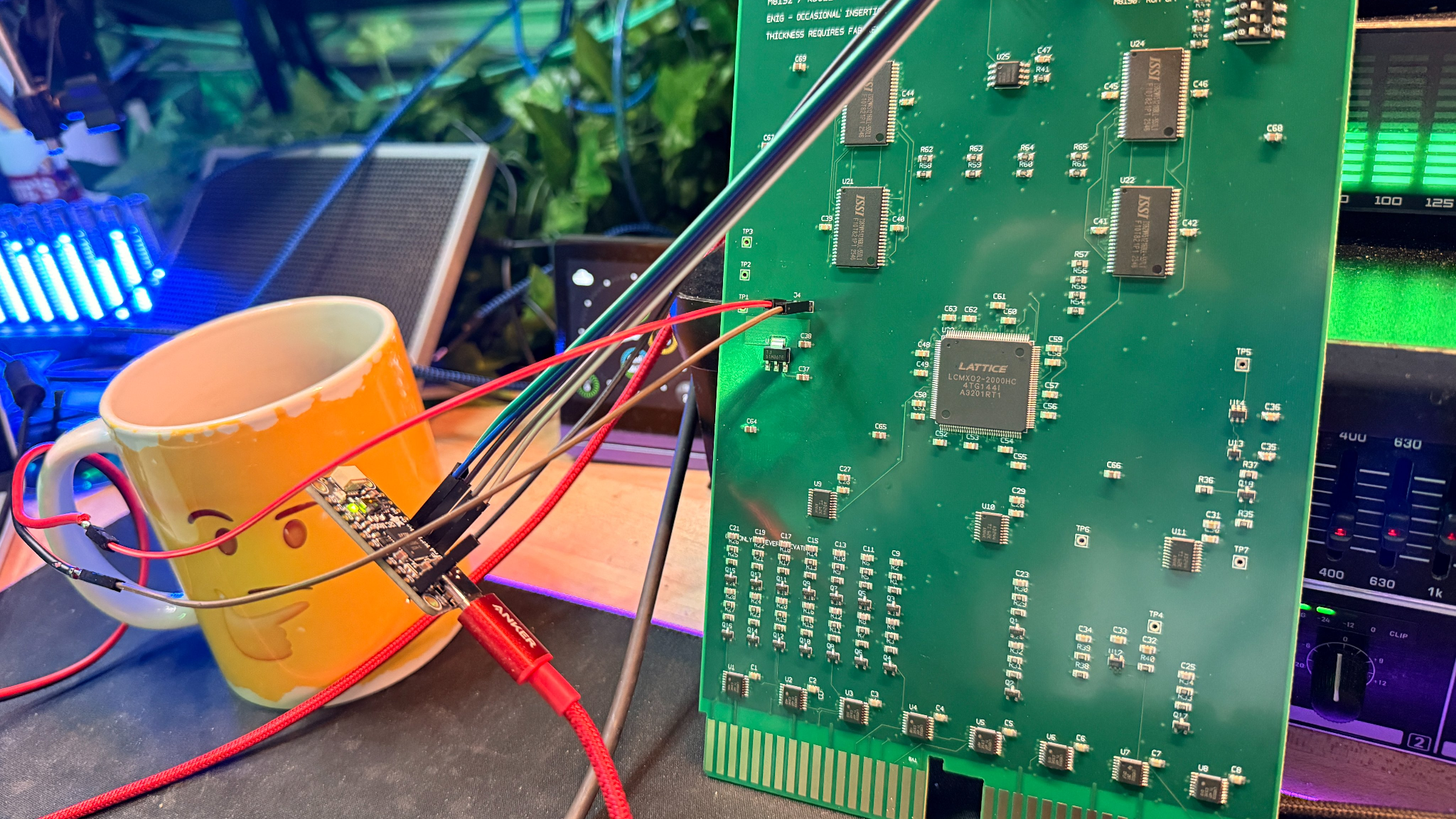
Image via Tom's Hardware
Former Microsoft engineer Dave Plummer builds his own PDP-11 RAM with help from ChatGPT
Dave Plummer, the ex-Microsoft engineer behind Task Manager and Windows Pinball, saw what vintage memory for his 1970s PDP-11 costs and decided to make his own, Tom's Hardware reports. With help from ChatGPT and the EasyEDA circuit tool, he designed a Q-Bus card with a Lattice FPGA acting as the memory controller and four 1MB memory chips, aiming for the 4MB that later PDP-11s could hold.
It took a few tries, including learning to flash an FPGA for the first time, and then he hit a classic PDP-11 quirk with how the bus reads and writes bytes inside a word. One commenter joked he'd "built 4MB of memory that turned out to be 2MB." In a year of RAM shortages, it's a fun reminder that you can still build your own.
Source: Tom's Hardware
Lanbrew rounds up the day's biggest tech stories. Every story above links to the original reporting, so click through to support the outlets doing the work.
Comments
Post a Comment