Tech News Roundup: Meta's $95B Stock Sale for AI, Apple's OLED iPad Mini, Anthropic's Public IPO Filing & More (Oct 26, 2026)

Meta (image via CNBC)
Meta is going big on funding its AI ambitions with a planned $95 billion stock sale, Apple's iPad mini finally goes OLED with an A20 Pro chip, and Anthropic's IPO filing is now public, with a Nasdaq ticker of ANT. Also today: Musk warns more than 200 neoclouds face "guppy-level death" as SpaceX closes its $40 billion GPU deal, Verizon lands a $2 billion-plus AWS fiber deal, Intel's CEO has reportedly talked partnership with AMD's Lisa Su, Elvis Presley's music owners sue Anthropic, Apollo's chief economist says AI has paid off only for Big Tech, a 256-core Zen 6c chip flexes on Zen 5, Wired reviews the Steam Frame, Claude Code finds a cryptominer on a Mac, Turo flags Teslas with FSD, Tesco swaps VMware for Proxmox, Chinese researchers claim a 3.2 Pb/s fiber record, and NASA's Swift observatory signs off after almost 22 years. Here's the Lanbrew tech roundup for October 26, 2026.
Meta (image via CNBC)
Meta plans to raise $95 billion in new stock to pay for its AI build-out
Meta is going to the stock market for AI money, and the number is huge. The company said Monday it plans to raise $95 billion in total, starting with $35 billion through underwritten public offerings and then up to $60 billion more through an at-the-market program, CNBC reports. Nvidia, AMD and Broadcom have said they're interested in buying up to $5 billion of the shares between them.
Meta says the cash will go toward its apps, its Muse AI agent and its data center business. It's building four "superclusters" of more than a gigawatt each and expects to nearly double its total infrastructure capacity this year. The move follows last week's earnings, where revenue jumped 26% to $64.6 billion but investors fixated on negative free cash flow and a capex forecast raised to $135 billion to $145 billion. The stock slipped about 1.6% in early trading.
Source: CNBC

The new iPad mini (image via The Verge)
It's official: Apple's iPad mini goes OLED with an A20 Pro chip
After months of rumors, Apple has announced the new iPad mini, and it's the biggest update the little tablet has had in years. The Verge reports it gets a larger 8.5-inch OLED display (up from 8.3 inches) thanks to bezels that are 24% slimmer, in a 5.4mm body that's thinner and lighter than before. Brightness tops out at 1,200 nits and can dim all the way down to 1 nit for late-night reading.
Inside is the A20 Pro, which can run on-device AI models and supports Apple's newer Siri features. The 128GB and 256GB models get a five-core CPU, while the 512GB model gets six cores. Apple also added an "Acoustic Display" that pushes sound through the screen for more bass and volume. Still missing: ProMotion, so it's capped at 60Hz. Pricing starts at $699 for Wi-Fi and $849 with cellular, and it arrives just days before Apple's "Pro and tell" event on Wednesday.
Source: The Verge

Anthropic (image via Wired)
Update: Anthropic makes its IPO filing public and picks the ticker 'ANT'
What's new: last week we covered Anthropic's draft prospectus as reported by Reuters. Now the full S-1 is public. Anthropic plans to list on Nasdaq under the ticker ANT, and The Wall Street Journal says the IPO could happen later in November, Wired reports. The filing doesn't say how much Anthropic wants to raise or at what valuation.
The public version adds plenty of new detail. More than 11,900 customers spent at least $100,000 with Anthropic over the past year, about 1,900 spent $1 million or more, and roughly 250 topped $10 million. The Verge points out the compute bills: about $3.1 billion a month to SpaceX for Nvidia GPUs once all the planned capacity is delivered (up to $120.5 billion by 2029), at least $114.5 billion with Google and $44.9 billion with Microsoft through 2033, and $110 billion with Amazon over 10 years. The risk section is unusually blunt, warning that advanced AI could pose "catastrophic or existential risks to humanity."

Neocloud stocks (image via CNBC)
Musk says 200+ neoclouds face 'guppy-level death' as SpaceX closes its $40B GPU deal
What's new: the $40 billion SpaceX GPU financing we covered earlier this month is now done. Elon Musk said Sunday the deal has closed, and a Monday filing confirms a binding commitment with an Apollo-managed entity, CNBC reports. It's mostly callable debt for GPUs due to arrive in the first half of 2027. SpaceX's AI unit is now its biggest business, with third-quarter revenue up ninefold to $7.56 billion.
Musk also had a warning for the competition. He said debt markets have "almost entirely shut off" for companies without real revenue outside AI data centers, so the "200+ neoclouds are going to see guppy-level death and consolidation." Neocloud stocks took the hint Monday: Nebius and CoreWeave fell around 4% and IREN about 3%, on top of a rough month where CoreWeave and Nebius are down more than 30% and IREN about 40%. Worth noting: SpaceX now rents out compute itself, so it competes directly with these companies.

Verizon (image via CNBC)
Verizon signs a $2 billion-plus fiber deal with AWS and raises its outlook again
Verizon will supply high-capacity fiber connections to Amazon Web Services data centers under a deal worth more than $2 billion, Reuters reports via CNBC. It follows a $1 billion-plus dark fiber deal with Google in July, and CEO Dan Schulman says more hyperscalers, neoclouds and big enterprises are in talks for the same thing. For telecoms, connecting AI data centers is turning into a real new business.
The wireless side looked good too. Verizon added 406,000 postpaid phone subscribers in the third quarter, nearly double what analysts expected, and now sees 1.1 million to 1.2 million for the year, up from 750,000 to 1 million. Revenue of $34.3 billion missed estimates as fewer people upgraded phones after Verizon cut subsidies. Schulman also said that if SpaceX builds a rival mobile network, a terrestrial build would take four to six years and $300 billion to $500 billion.
Source: Reuters (via CNBC)

Intel (image via Tom's Hardware)
Intel's Lip-Bu Tan has reportedly talked with AMD's Lisa Su about working together
Intel and AMD teaming up isn't as wild as it sounds. Intel CEO Lip-Bu Tan has reportedly discussed possible areas of cooperation with AMD CEO Lisa Su, Tom's Hardware reports, though Tan didn't say what those areas are in his Oct. 24 fireside chat with CASPA. The two rivals already work together on x86 standards and, more recently, a shared PyTorch code path for AI inference on CPUs.
The rest of the chat was about Tan's turnaround plan. "We have to reclaim the leadership in CPU," he said, adding that Intel now builds custom chips for customers' workloads instead of insisting on its own roadmap. He wants two or three newer businesses, like ASICs, co-packaged optics, physical AI and advanced packaging, to each bring in about 10% of revenue. On the foundry side, 18A is in volume production and the 14A design kit is headed for version 1.0 in early 2027.
Source: Tom's Hardware
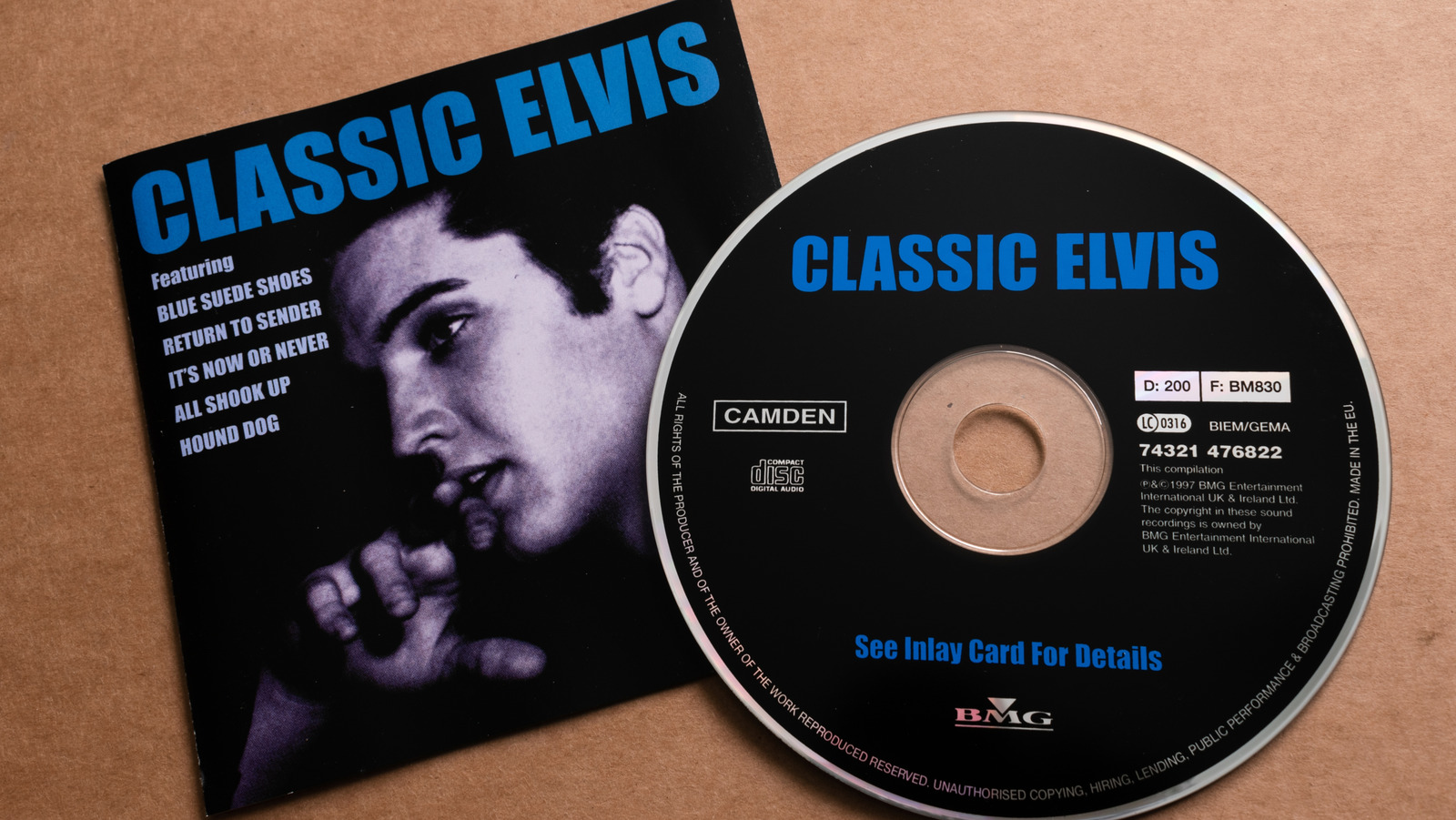
Elvis Presley (image via Engadget)
Elvis Presley's music owners sue Anthropic for $41 million
The King is taking on Claude. The owners of Elvis Presley's music catalog, including Authentic Brands Group and Raleigh Music Publishing, sued Anthropic on Oct. 23, claiming it trained its AI models on 274 Elvis songs without permission, Engadget reports, citing The New York Times. They're asking for $41 million and say Anthropic got around DRM and stripped copyright info from 247 of the songs, including "Can't Help Falling in Love" and "A Little Less Conversation."
It's one of several music lawsuits Anthropic is fighting: Universal and Concord sued over 20,000 songs, and Sony and Warner have filed their own case. Anthropic has argued that training on copyrighted music is fair use. What makes this one stand out is that it's about a single artist who died almost 50 years ago, and it lands the same day Anthropic's IPO filing went public.
Source: Engadget

(image via The Register)
Apollo's chief economist says AI has paid off for Big Tech and almost nobody else
Apollo Global Management's chief economist Torsten Slok has a blunt take: outside the tech giants, AI has delivered "zero financial payoff" so far. The Register reports Slok looked at the S&P 500 minus the Magnificent Seven and found revenue per worker, profit margins and productivity growth all basically flat, while the big tech firms pull ahead.
He also says companies are starting to see token bills as a cost that eats into margins rather than a source of growth. Not everyone buys it. Some point out that PCs took a decade or more to show up in productivity numbers. But it lines up with earlier surveys from PwC and Deloitte that found most companies aren't seeing AI move the bottom line yet.
Source: The Register
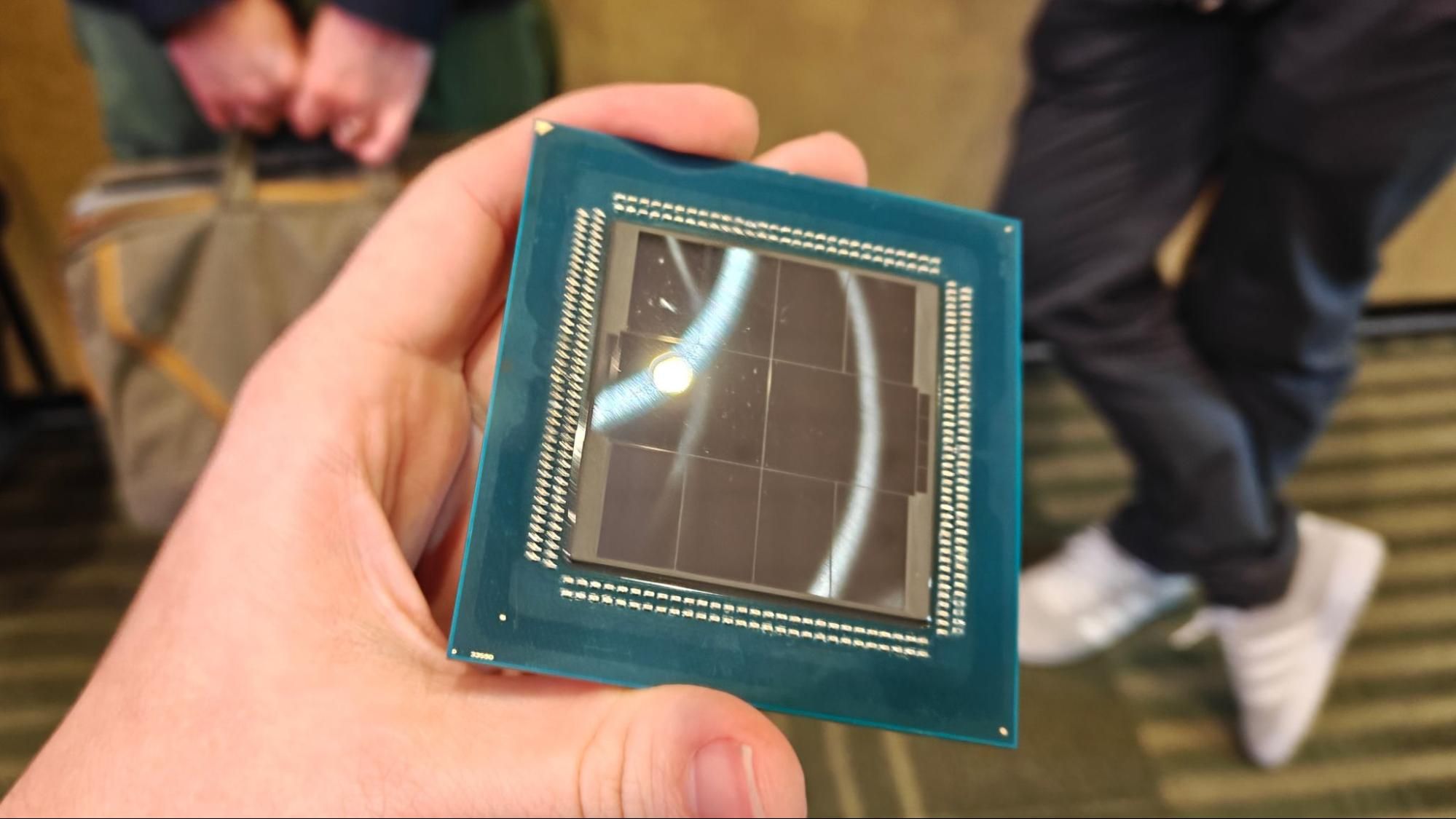
AMD EPYC (image via Tom's Hardware)
A 256-core Zen 6c EPYC chip shows big single-threaded gains over Zen 5
The first third-party benchmarks of AMD's Zen 6 are showing up, and they look strong. A Geekbench result for the 256-core EPYC 9996, a server chip with a full 1GB of L3 cache, was put head to head with a Zen 5 Ryzen 7 9700X running at the same 4.1GHz clock, Tom's Hardware reports. The EPYC scored 2,847 in single-threaded, against 2,483 for the Ryzen on Linux.
The biggest gap was about 24% in an HTML5 browser test, which the huge cache probably helps a lot. But gains of 17% to 21% in photo editing, video encoding and asset compression point to real architectural improvements. Tom's Hardware warns there are lots of variables here, and the dense Zen 6c cores aren't what desktop chips will use, but it's a promising sign for Zen 6 desktops next year.
Source: Tom's Hardware

Valve Steam Frame (image via Wired)
Wired gives Valve's Steam Frame a 7/10: great hardware, shaky software
Wired's Steam Frame review lands at 7 out of 10. The hardware gets a lot of love: at 440 grams it's 75 grams lighter than the Quest 3, the battery sits at the back for better balance, the 2160 x 2160-per-eye LCD lenses are sharp, and the 110-degree field of view runs at 72 to 120Hz, with an experimental 144Hz mode. The controllers, with a full D-pad, ABXY buttons and Steam Controller-style sticks, are called the best part of the package.
The problem is what happens when you actually play. Only 18 games in the reviewer's 1,300-plus Steam library were marked "Great on Frame," and Half-Life: Alyx, which comes free with the headset, wasn't one of them (it runs fine anyway). Other VR games crashed or stuttered, and 2D games default to 720p. It costs $1,059 for 256GB or $1,299 for 1TB, so Wired's verdict is that it's a lot of fun when it works, but right now running anything is a gamble.
Source: Wired

(image via 9to5Mac)
Claude Code finds a cryptominer on a Mac, then insists it didn't put it there
A Reddit user asked Claude Code to build a temperature monitor app for their Mac and found out why the machine was running so hot, 9to5Mac reports. Claude spotted xmrig, a crypto miner, eating about 1,175% CPU, or roughly 12 cores, with temps peaking at 112°C.
The funny part is how Claude announced it: "your Mac is running a cryptominer that I didn't put there." Nobody had asked. Some Redditors found the unprompted denial a little suspicious, but it's far more likely a training quirk than a rogue AI. Either way, if your Mac is mysteriously hot, it's worth checking Activity Monitor.
Source: 9to5Mac

Tesla FSD (image via TechCrunch)
Turo will flag Teslas with Full Self-Driving so renters can try it
Car-sharing marketplace Turo will start showing which Teslas on its platform have Full Self-Driving (Supervised), using Tesla's API to verify which cars have it turned on, TechCrunch reports. Eligible hosts get a free one-month FSD trial too. The Model 3 and Model Y are already the third and fourth most-rented vehicles on Turo this year.
It's a smart way for Tesla to get more people trying FSD. Tesla said last week about 1.7 million customers have paid for it worldwide, out of more than 10 million cars sold, and that over 75% of North American buyers in the third quarter signed up for an FSD subscription. FSD still needs a human paying attention behind the wheel.
Source: TechCrunch
(image via The Register)
Tesco is swapping VMware for Proxmox in its stores
UK grocery giant Tesco looks ready to drop VMware at the edge. A new job listing for a Head of Software Engineering covers "the migration from VMware to Proxmox" across Tesco's store computing platform, The Register reports, along with building a new system to manage software across thousands of locations.
That's a big vote of confidence for Proxmox, the open-source virtualization platform from Austria that has become a popular VMware alternative since Broadcom's licensing changes. One past knock on Proxmox was support only during Austrian business hours, but it added 24/7 enterprise support in September.
Source: The Register
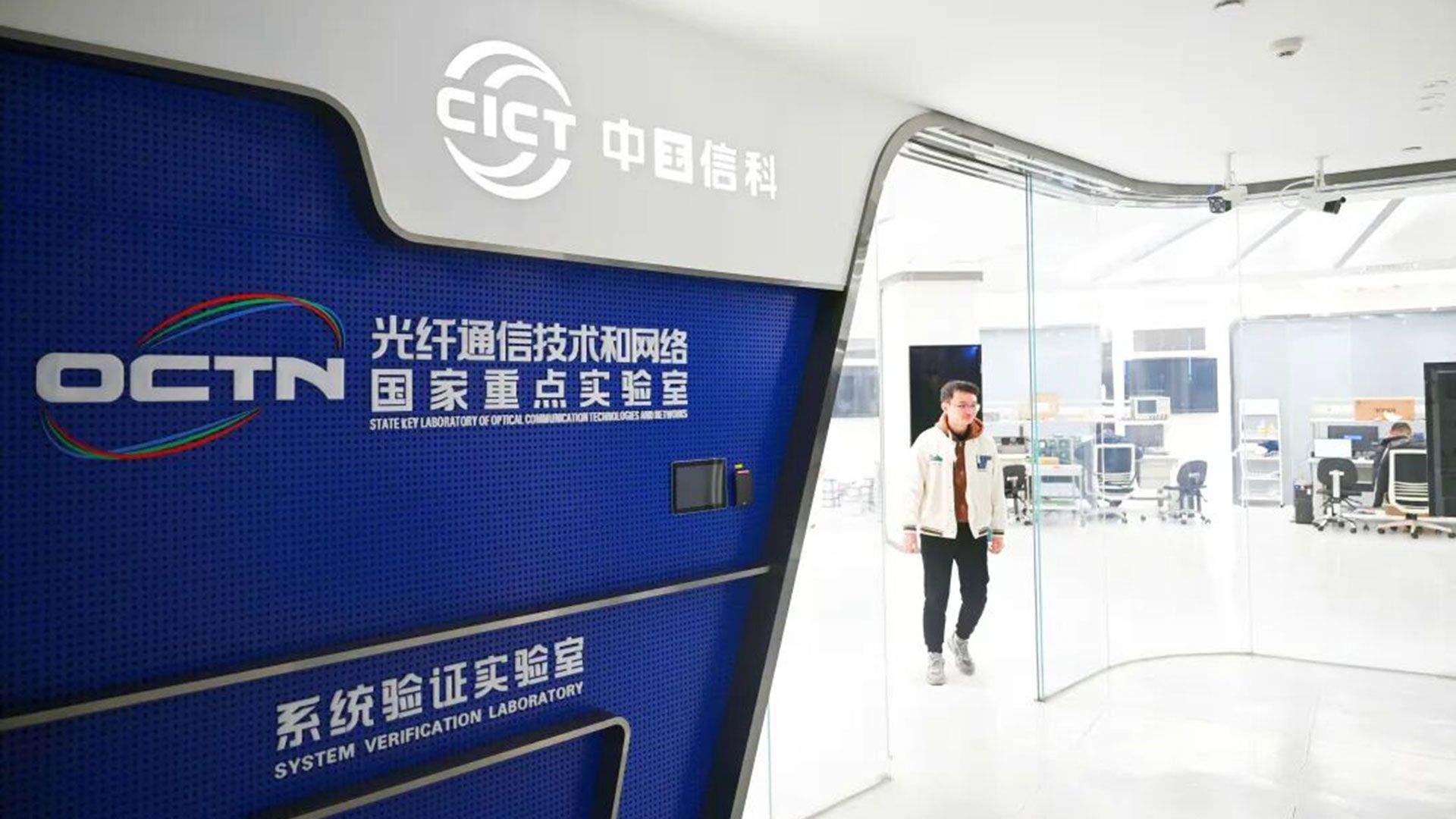
Optical fiber (image via Tom's Hardware)
Chinese researchers claim a 3.2 petabit-per-second fiber speed record
A group of Chinese labs and fiber makers says it pushed 3.2 petabits per second through a 24-core optical fiber in real time, Tom's Hardware reports. That's about 30% faster than the 2.5 Pb/s record the same team set earlier this year, and roughly 3.2 million times a gigabit home connection.
The team used spatial division multiplexing and S+C+L multi-band transmission, and says it ran on commercially compliant hardware, so this isn't just a lab trick. Don't expect it at home, though: think undersea cables and data center backbones.
Source: Tom's Hardware
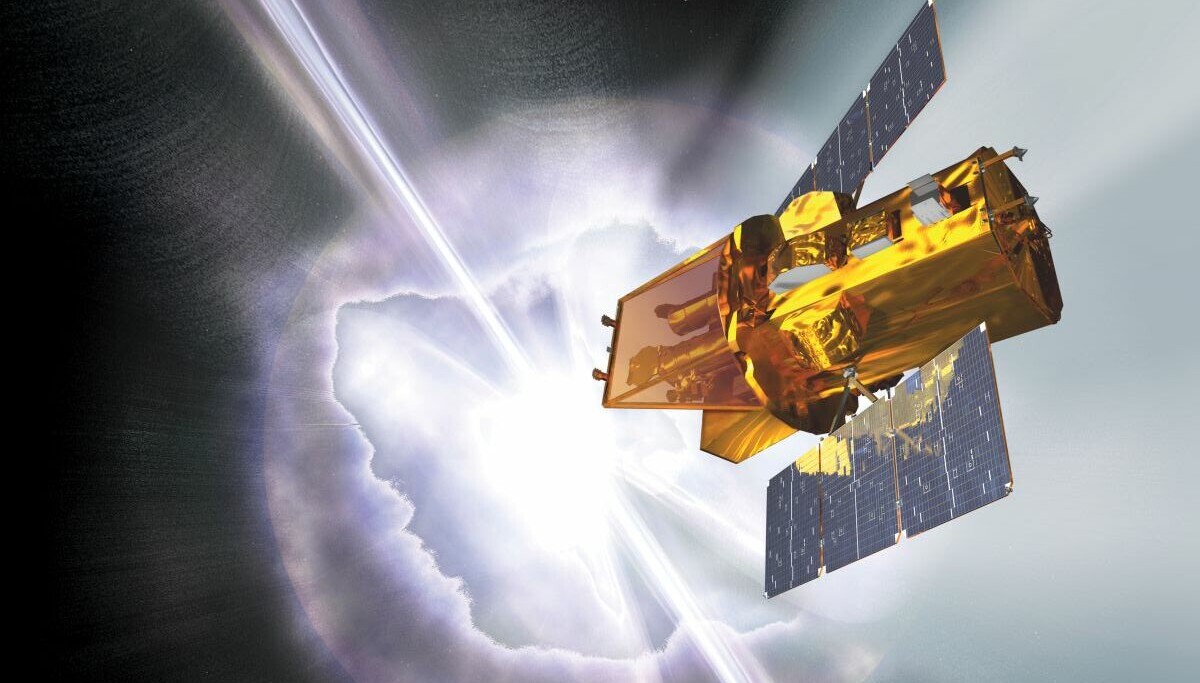
NASA's Swift observatory (image via The Register)
NASA's Swift observatory ends its mission after almost 22 years
NASA's Swift made its final observation on Oct. 20 and is expected to burn up in the atmosphere within weeks, The Register reports. It launched in 2004 on a two-year mission to study gamma-ray bursts and kept going for nearly 22 years. A rescue mission to boost its orbit, contracted to Katalyst Space, never managed to rendezvous, and with no thrusters of its own, Swift couldn't fight the drag.
What a run, though: more than 2,000 gamma-ray bursts and 1,400 supernovae observed, an all-sky X-ray survey and stars torn apart by black holes, all in a roughly 12TB archive. NASA doesn't have a direct replacement lined up.
Source: The Register
Lanbrew rounds up the day's biggest tech stories. Every story above links to the original reporting, so click through to support the outlets doing the work.
Comments
Post a Comment