Tech News Roundup: Google Cloud Outage Hits UK Banks, OpenAI Races Anthropic for Cash, Salesforce Buys Braze & More (Oct 20, 2026)

A "power event" took down a Google Cloud zone in London (image via The Register)
Tuesday's tech news starts with a reminder of how much runs on the cloud: a power failure in one Google Cloud zone in London knocked UK banks, delivery firms and even remote court hearings offline for hours. In AI and chips, ByteDance, Alibaba and Tencent reportedly ordered $35 billion worth of Nvidia RTX PRO 5500 cards, OpenAI is racing to raise about $30 billion before Anthropic's IPO, Anthropic is negotiating a second $45 billion compute deal with Nscale, Salesforce is buying Braze for $5.66 billion, and Qualcomm is planning job cuts. Plus: Amazon's €16 billion German investment, a privacy slip in Meta's Muse agent, a run of supply-chain attacks (OVHcloud's CLI, Rank Math PRO and AOMEI Backupper), a UK proposal on iPhone contactless payments, Windows blocking ReFS on USB drives, a Microsoft VPN fix that didn't stick, Lightroom's one-tap eye fix, and an HPE computer headed for the Moon. Here's the Lanbrew tech roundup for October 20, 2026.
A Google Cloud power failure knocked UK banks, courts and shops offline
A "power event" in one of Google Cloud's London data center zones caused a major outage across the UK on Tuesday. Problems started at 06:08 UTC (1:08am CT) in the europe-west2-b zone, one of three availability zones in Google's London region. Services including Cloud Run, Google Kubernetes Engine, App Engine, Cloud Filestore and Managed Service for Apache Kafka all threw errors, and Google said at first there were no workarounds.
The knock-on effects were wide. Customers of Lloyds, Halifax, HSBC and Revolut reported trouble with logins, card payments, transfers and cash withdrawals, and Downdetector also lit up for Royal Mail, DPD, Rightmove, BT and Screwfix. The Guardian says the video system used for remote court hearings in England and Wales was down all morning, delaying some cases, and the Financial Conduct Authority said it was in touch with Google. Revolut said customers' money and data were safe. Google said the power problem was mitigated and services started coming back around 1pm London time (7am CT), with existing workloads restored first.
A Keele University computer scientist told The Register that about 38 services went down, and that the incident shows how one failing cloud zone can ripple through payment systems, apps and other services several layers removed from Google itself.
Source: The Register; The Guardian; The Register (first report)

Nvidia (image via Reuters / The Economic Times)
ByteDance, Alibaba and Tencent reportedly order $35 billion worth of Nvidia RTX PRO 5500 cards
Reuters reports that ByteDance, Alibaba and Tencent have ordered more than 3 million of Nvidia's new RTX PRO 5500 workstation graphics cards, at roughly $11,400 each, for a combined sticker price of over $35 billion. The card is one of the most powerful Nvidia chips Chinese companies can still buy under current US export rules, and the companies mainly want it for AI inference, meaning running already-trained models.
The catch is supply. Sources say Nvidia has told customers it can't guarantee the orders, may only deliver 5% to 10% of what was requested, and can make no more than 3 million of the cards worldwide in 2027. Total orders from China have topped 6 million, according to two sources. Tom's Hardware notes the RTX PRO 5500 has the same CUDA core count as the RTX 5090 but carries 84GB of GDDR7 memory, which is a big reason it appeals for AI work.
Source: Reuters (via The Economic Times); Tom's Hardware
OpenAI (image via Reuters / CNA)
OpenAI is racing to raise about $30 billion before Anthropic's IPO
OpenAI is moving unusually fast on a new funding round of about $30 billion that could value it at more than $1.4 trillion, Reuters reports, and the goal is to get it done before Anthropic's expected stock market debut in mid-November. SoftBank, Abu Dhabi's MGX and other existing backers are in talks to join, and OpenAI met with long-only funds and sovereign wealth funds last week while Anthropic was holding its own investor day.
According to one source, OpenAI is telling investors it hit $50 billion in annualized revenue after launching GPT-6 Astra and expects $70 billion by the end of the year. It also wants the money in hand before Anthropic's IPO filings invite side-by-side comparisons of the two companies' numbers. OpenAI was last valued at $852 billion in March, after a record $122 billion round.
Source: Reuters (via CNA)

Salesforce (image via CNBC)
Salesforce is buying marketing platform Braze for $5.66 billion
Salesforce has agreed to buy Braze, which makes AI-powered tools that help brands manage customer data and send marketing messages, for about $5.66 billion in cash. Braze shareholders will get $47.50 a share, a big premium over Monday's $30.04 close, and Braze stock jumped more than 50% on Tuesday after a brief premarket halt. Salesforce shares slipped about 1%.
The deal is expected to close in Salesforce's fiscal 2028, pending shareholder and regulatory approval. It comes only months after Salesforce agreed to buy AI customer service company Fin for about $3.6 billion, as it keeps adding AI agent tools for business customers. Braze CEO Bill Magnuson says the company will keep building under the Braze name.
Source: CNBC

Nscale (image via CNBC)
Anthropic is reportedly negotiating a second $45 billion compute deal with Nscale
Anthropic is in talks with UK-based AI cloud provider Nscale about a second multibillion-dollar deal to lease computing capacity, CNBC confirmed after Bloomberg first reported it. A person familiar with the talks says the agreement would cover a second 460-megawatt data center at the same West Virginia site as their first deal, and could be worth around $45 billion. Anthropic declined to comment.
It's a welcome headline for Nscale after a rough few days. Over the weekend, Microsoft pulled out of anchoring Nscale's planned data center near London because of grid connection delays, and rival neoclouds CoreWeave and Nebius have each lost more than a quarter of their stock value in the past month over debt worries. Anthropic has been signing compute deals with AMD, Google, Broadcom and SpaceX after saying demand for Claude had put "inevitable strain" on its infrastructure.
Source: CNBC
Qualcomm (image via Reuters / CNA)
Qualcomm plans worldwide job cuts after its annual reviews
Qualcomm will cut jobs around the world in what CEO Cristiano Amon called a "performance-focused reduction," according to an internal memo seen by Reuters. Notifications start in November, after the company's annual employee reviews. The memo doesn't say how many jobs are affected. Qualcomm had about 52,000 employees as of last September.
Amon said the cuts are meant to build "a stronger performance culture" and that skills, business priorities and organizational needs will factor in. Qualcomm has been hurt this year by weak phone and consumer electronics sales, partly because high memory prices are dragging on demand. Its stock is up only 1.5% in 2026, versus nearly 60% for the Philadelphia Semiconductor Index, and the company is betting on AI data center chips and other non-phone businesses to make up most of its chip sales by fiscal 2027.
Source: Reuters (via The Globe and Mail); Reuters (via CNA)

Amazon's Germany investment (image via Amazon)
Amazon will invest more than €16 billion in Germany in 2027
Amazon says it will spend more than €16 billion (about $18 billion) in Germany next year, announced at the Invest in Germany Summit in Berlin. The biggest single piece is €4.8 billion to expand the AWS Frankfurt cloud region and its AI infrastructure. The rest covers new logistics projects that Amazon says will create more than 3,000 jobs, its Amazon Leo satellite internet network, new Prime Video productions, and a second robotics and AI research lab in Berlin.
Amazon says it has invested more than €100 billion in Germany since 2010. The new package follows a €10 billion commitment in June 2024, most of which went to AWS data centers.
Source: Reuters (via CNA); Amazon

Meta Muse share links (image via Ars Technica)
Meta pauses Muse's sharing feature after researchers find thousands of exposed chats
Meta has paused the share-link feature in Muse, its new AI agent, after security firm Claroc showed the links were easy to find. When you share a Muse conversation, the link uses a subdomain on cf.metaaiusercontent.com that includes the conversation's title. Once someone opens it, that address can show up in passive DNS databases, which anyone can search. Claroc says it found 6,800 shared links with a single query.
After opening a few hundred, the researchers found things clearly not meant to be public: notes for a confidential executive-search call with an AI lab, a company's internal revenue review, a small business loan application, a to-do list with a partial bank account number, a real estate investor's income and mortgage figures, and a full staff vacation calendar. Meta says it opened a bug bounty for Muse and has paused the feature while it reviews how the links can be discovered. Ars notes this is the second security problem for Muse since launch, after a zero-day found by Mac security researcher Patrick Wardle.
Source: Ars Technica

OVHcloud (image via BleepingComputer)
Hackers backdoored OVHcloud's command-line tool on GitHub
French cloud provider OVHcloud says attackers hijacked a developer's GitHub account and swapped in malicious builds of its open-source OVHcloud CLI, the command-line tool admins and developers use to manage OVHcloud services. Versions 0.11.0 through 0.15.0 were modified to carry malware that tried to pull secrets off the user's disk. CEO Octave Klaba says the tampered releases were live for about an hour and a half on Monday before a customer reported them and they were blocked.
Version 0.10.0 and the newest 0.16.0 are clean, and anyone who grabbed the tool on Monday should update or remove it. Klaba says GitHub's release immutability setting was turned off for the repo, which let a privileged account change existing releases without going through OVHcloud's CI/CD checks. The pipelines themselves were not affected.
Source: BleepingComputer
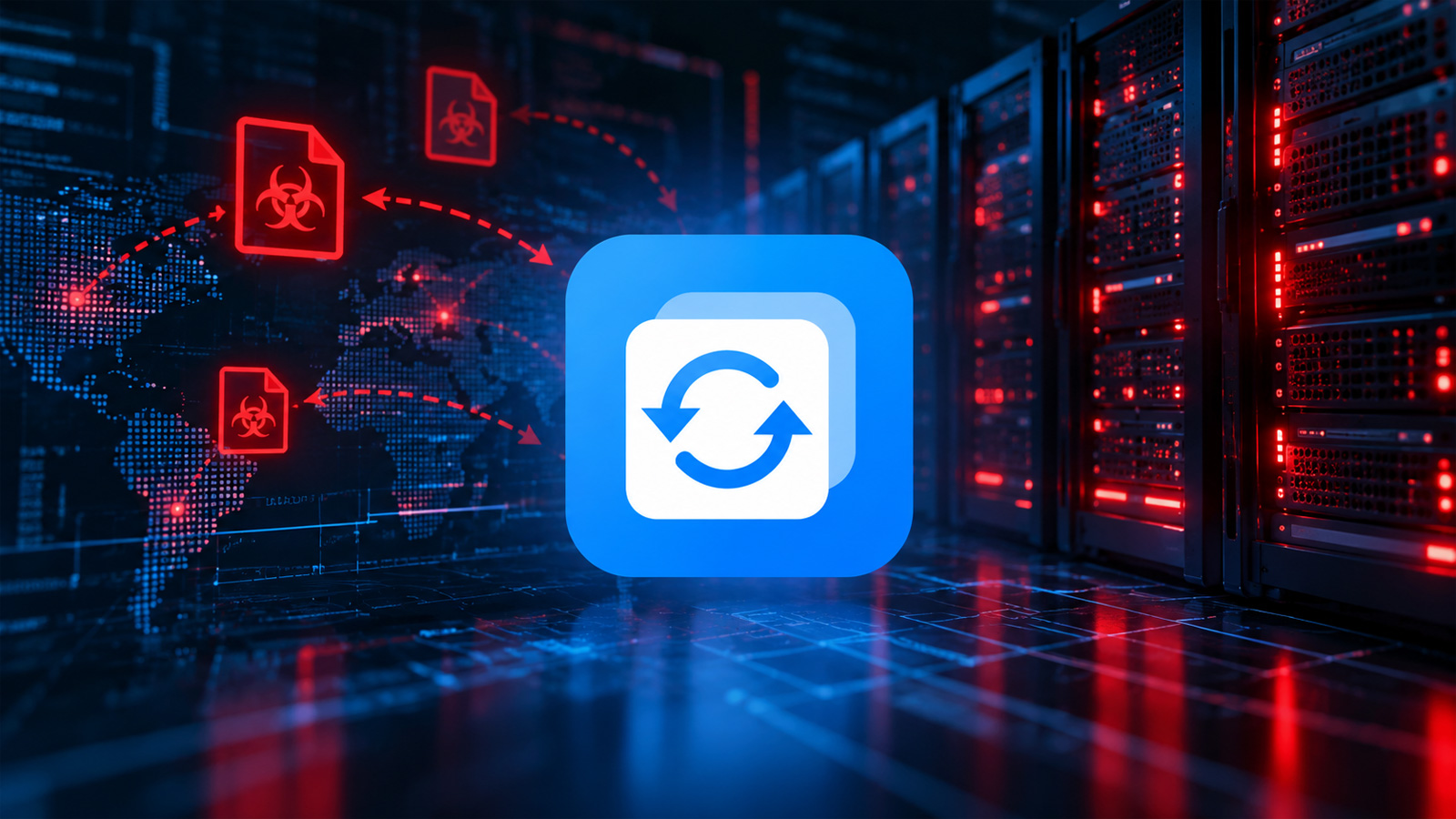
AOMEI Backupper (image via BleepingComputer)
Two more supply-chain attacks: Rank Math PRO and AOMEI Backupper
Some copies of Rank Math PRO, a paid WordPress SEO plugin, were trojanized on the vendor's own site. Anyone who downloaded version 3.0.123 between October 15 at 20:02 UTC and October 16 at 07:12 UTC may have gotten a build that plants hidden backdoors once activated, contacts a rank1cdn[.]com server, and recreates the backdoors whenever the site is visited. Rank Math pulled the files and released a clean 3.0.124. Sites that activated the bad version should be treated as compromised. The free Rank Math SEO plugin from WordPress.org, active on more than 4 million sites, was not affected.
Separately, Google's Threat Intelligence Group, Mandiant and ManageEngine say a group tracked as UNC7017 hijacked the update and notification servers for AOMEI Backupper, a popular Windows backup tool, between April and July. The attackers briefly edited two config files so the app's promo system would download and run a new downloader called CROSSROAD and a backdoor called SHINYROAD, then put the files back to hide their tracks. Victims were found in the US, Australia, India, Singapore, Spain and Switzerland, and Google warns that anyone who checked for updates during those short windows could have been hit.
Source: BleepingComputer (Rank Math); BleepingComputer (AOMEI)

Apple Wallet (image via BBC News)
UK regulator wants Apple to open up iPhone contactless payments
The UK's Competition and Markets Authority has proposed new rules for how Apple handles tap-to-pay on iPhones. It wants Apple to allow apps to use Host Card Emulation (HCE), a widely used contactless standard that Apple doesn't currently allow in the UK, and to make the fees it charges for contactless access "substantially lower." The CMA says nearly 2 in 5 UK payments are now contactless and almost 60% of people use digital wallets, but no other company has launched a wallet that competes with Apple's in the UK.
Apple opened NFC payments to other apps in the EU in 2024 under a settlement there, but UK developers still have to work inside Apple's system and pay fees. Apple says its current setup already lets banks and developers offer contactless payments, transit passes, car keys and tickets, and that the CMA shouldn't require an approach with "lower privacy and security protections." The proposals are now open for consultation.
Source: BBC News; Engadget; 9to5Mac
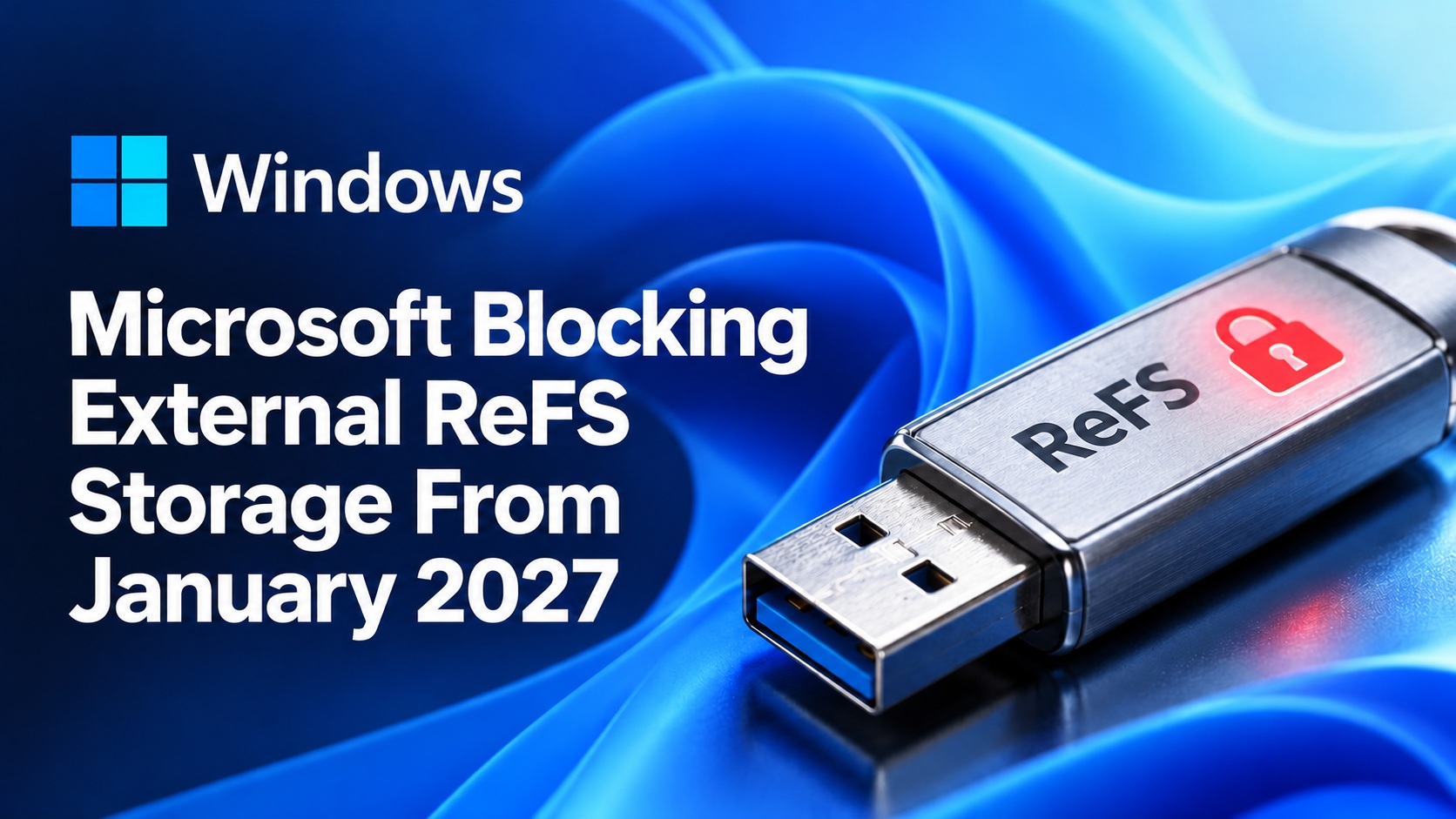
Windows ReFS on USB drives (image via Wccftech)
Windows will start blocking ReFS-formatted USB drives in January
Microsoft is phasing out support for ReFS, its newer Resilient File System, on removable drives like USB sticks and external SSDs. ReFS was built mainly for servers and was never officially supported on removable media, though Windows has generally let people mount those drives anyway. Since the October 13 security updates, Windows logs audit events when it spots a ReFS volume on external media. Starting with the January 2027 security update, those volumes will be blocked from mounting by default.
The change covers Windows 11, supported Windows 10 versions and Windows Server. Your files aren't deleted, but Windows won't open them once blocking kicks in, so anyone using ReFS on a portable drive should move that data to a supported setup. Admins can change the behavior with registry settings or Group Policy. Most people use NTFS or exFAT on external drives and won't notice anything.
Source: Wccftech; Microsoft Support

Microsoft's VPN fix (image via The Register)
Microsoft's Always On VPN fix didn't actually fix it
Microsoft has walked back its claim that the October 13 update fixed a Windows 11 Always On VPN bug. The problem, which arrived with September's security update, affects Windows 11 versions 24H2 through 26H2 when a VPN profile is set to fall back to another protocol, such as automatic selection between IKEv2 and SSTP. Affected connections can sit stuck on "Connecting" or fail with "The specified port is already in use."
Microsoft says the issue was "mistakenly updated to Resolved status" and has moved it back to Mitigated. The workaround is still to set the VPN profile to a single protocol (SSTP only or IKEv2 only), and Microsoft says a real fix is planned for an update "in the coming weeks."
Source: The Register

Lightroom's Open Eyes tool (image via The Verge)
Lightroom mobile can now open closed eyes with one tap
Adobe's Lightroom app for iPhone, iPad and Android has a new Open Eyes Quick Action. When it spots someone, or a whole group, blinking in a photo, an icon pops up over the image, and one tap uses generative AI to open their eyes. Lightroom also looks at other photos of the same person in your library so the new eyes match their real color, size and shape, along with the photo's lighting and pose.
Photoshop Elements has offered a similar fix for years, but it copies eyes from another shot, with mixed results. Free Lightroom mobile users get two tries before Adobe asks them to subscribe to a Creative Cloud plan with more AI credits, according to DPReview.
Source: The Verge
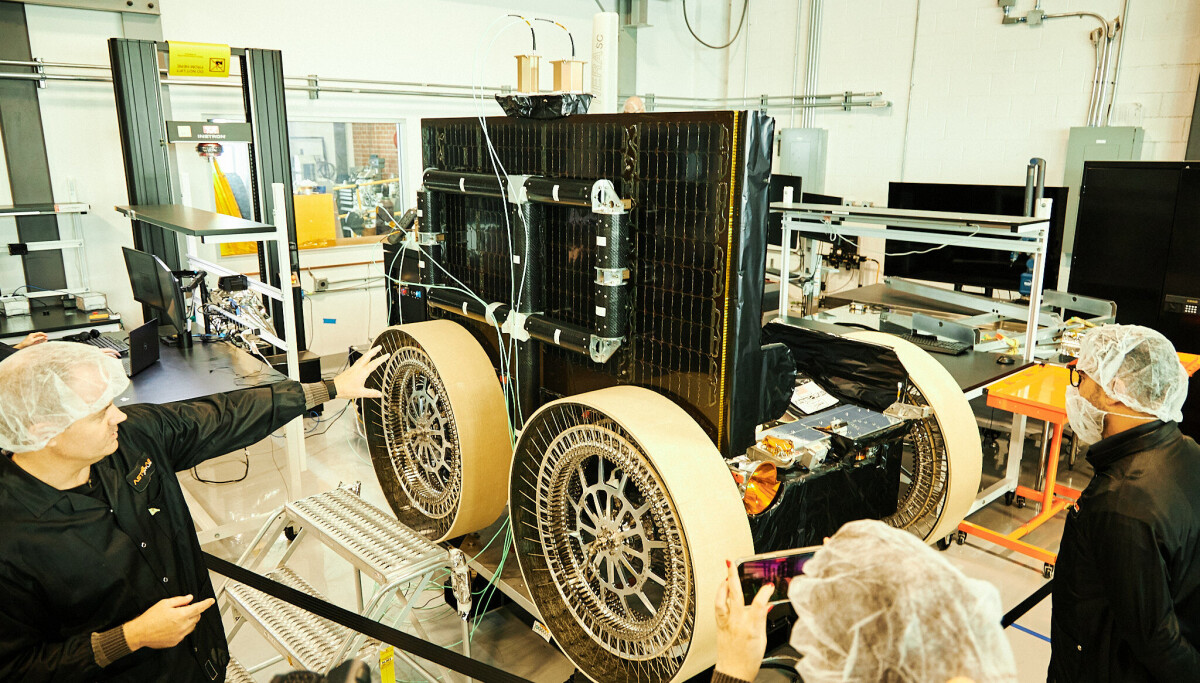
Astrolab's FLIP rover (image via The Register)
HPE is sending an AI computer to the Moon
HPE's fourth-generation Spaceborne Computer, SBC4, will ride to the Moon's south pole on Astrolab's FLIP rover, which is set to land later this year aboard the Griffin-1 lander as part of NASA's Commercial Lunar Payload Services program. HPE has spent years running computers on the International Space Station, and this is its first trip to the lunar surface. The system is about 5 by 10 inches and an inch thick, with a low-power CPU, a GPU and two mirrored 1TB Kioxia SSDs. HPE won't say whose chips are inside until it's running, because the chip partner doesn't want its name tied to a possible failure.
During the rover's planned year-long mission, NASA will run tuned large language model tests on SBC4, including a system for searching onboard documents, along with machine learning on camera and LiDAR data. HPE also plans to run the Linpack and HPCG supercomputer benchmarks, which would make it the first Top500 submission from another world. Running heavy jobs could even help keep the rover warm during the roughly 14-day lunar nights.
Source: The Register
Comments
Post a Comment