Tech News Roundup: Chinese Rocket Debris in a Minnesota Cornfield, Nvidia's Vera CPU Wins Modal, Tenstorrent Hits $6.2B & More (Oct 19, 2026)

Debris found in a Minnesota cornfield (image via Ars Technica)
Monday's tech news starts somewhere unusual: a farmer's cornfield in Minnesota, where an 11-foot piece of what looks like a Chinese rocket stage turned up during the harvest. In AI hardware, Nvidia's new Vera CPU won over AI cloud startup Modal, Jim Keller's Tenstorrent more than doubled its valuation to $6.2 billion, and Amazon is backing a 960 MW small modular reactor plan in Indiana. It's a rough start to the week for IT admins too: October's Windows Server updates are breaking some Exchange servers, ConnectWise pulled its Cloud Backup service after a breach that reached Microsoft 365 tenants, a 16-year-old Broadcom Wi-Fi bug can still hijack routers, and F5 patched critical NGINX flaws. Plus: Europe's big carriers plan a satellite-to-phone bid, MiniMax's cheaper M3.1 Flash, Jio's $25 billion IPO anchor book, CXMT's profit surge, Google's AI help pages, GM's Apple Wallet car keys, and Uber's win over London black cab drivers. Here's the Lanbrew tech roundup for October 19, 2026.
A piece of a Chinese rocket likely turned up in a Minnesota cornfield
A farmer combining his corn in Scott Township, in west-central Minnesota, found a circular metal object about 11 feet across sitting among the stalks. The Stevens County Sheriff's Office got the call on Wednesday and confirmed a large metallic object, "presumably a space object." It says it's working with state and federal agencies to identify the owner and remove the debris, and that it posed no danger to the public.
Ars Technica says the evidence points to the upper stage of a Zhuque-2E, a methane-fueled rocket built by Chinese company LandSpace. It launched on September 15 from the Dongfeng commercial launch zone, put 10 Qianfan ("Thousand Sails") broadband satellites into orbit, then fired its engine to drop out of orbit. That night, people saw fiery debris streaking north over Kansas toward Minnesota. The stage is 11 feet (3.35 meters) wide, which matches the object. Deorbiting spent stages is normally the responsible thing to do, but it's unusual for a piece this large to survive reentry. Under international law, the launching country is liable for any damage on the ground.
Source: Ars Technica

Nvidia (image via Reuters)
Nvidia's Vera CPU wins over AI cloud startup Modal
Modal, which rents computing power to AI developers, will start using Nvidia's new Vera central processor to host AI agents. Until now it has run that work only on Intel and AMD chips, and Reuters calls the deal an early sign that Nvidia's push into CPUs is gaining traction. Modal says early tests showed Vera roughly doubled the work agents could get done compared with the Intel and AMD chips on the market today. In a blog post, Modal says Vera's high memory bandwidth lets it keep its pace as containers pile up, while the x86 machines hit throughput plateaus. Supporting Vera's Arm architecture will take deep software changes on Modal's side.
CEO Erik Bernhardsson stressed that Modal isn't dropping its current suppliers. It will run a mixed fleet and test Intel's and AMD's newer chips when they arrive. Modal raised $750 million last week at a $15.75 billion valuation. Nvidia has told investors it expects at least $20 billion in Vera sales this fiscal year, and it says OpenAI, Anthropic and Oracle also plan to use the chips.
Source: Reuters (via KELO); Modal
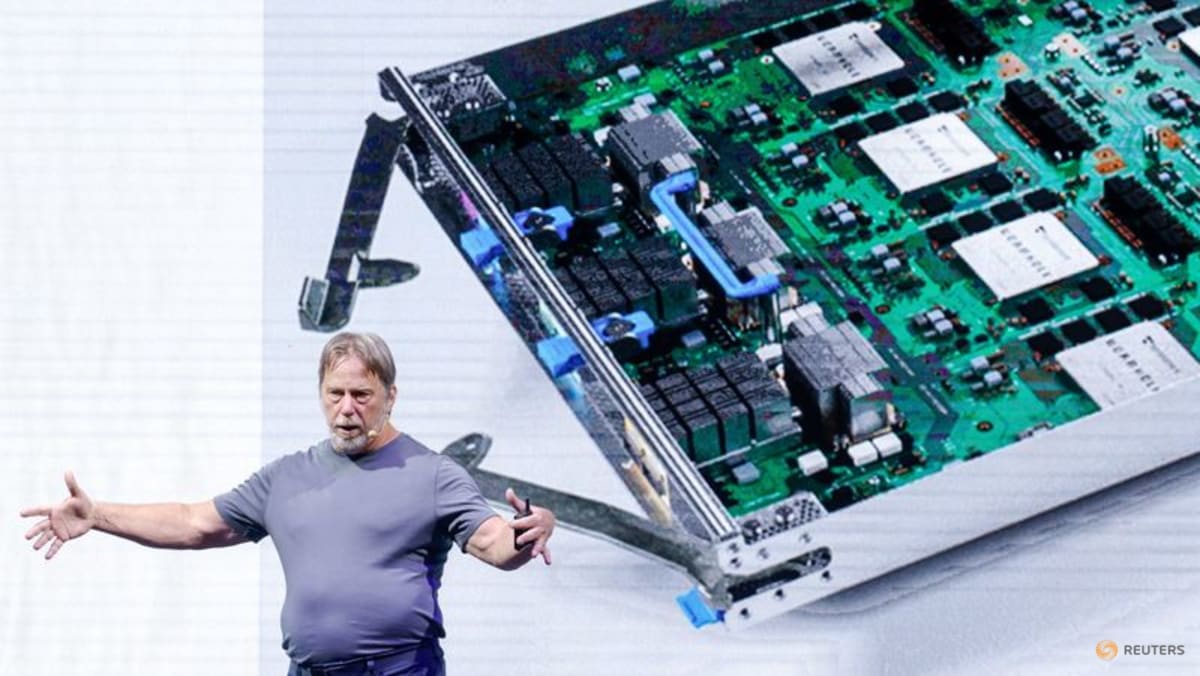
Tenstorrent CEO Jim Keller (image via Reuters / CNA)
Jim Keller's Tenstorrent raises $1.5 billion at a $6.2 billion valuation
AI chip startup Tenstorrent closed a $1.5 billion Series E at a $6.2 billion post-money valuation. That's more than double its value from December 2024, when it raised over $693 million at a $2 billion pre-money valuation. Trace Capital and Innovation X led the round, and backers include ARK Invest, Fidelity, Morgan Stanley, Sandisk, T. Rowe Price and Tether Investments. The money will scale production of its Galaxy servers, which combine dozens of its AI chips to run chatbots, coding assistants and video generators. It will also go toward the AI and CPU designs Tenstorrent licenses to companies building their own silicon.
Tenstorrent's chips use RISC-V, an open-source architecture that doesn't require license fees. The Globe and Mail notes that Intel and Qualcomm were both reported earlier this year to have tried to buy the company for upward of $5 billion. Tenstorrent was founded in Toronto 10 years ago and has about 1,000 employees.
Source: Reuters (via CNA); The Globe and Mail; Tenstorrent
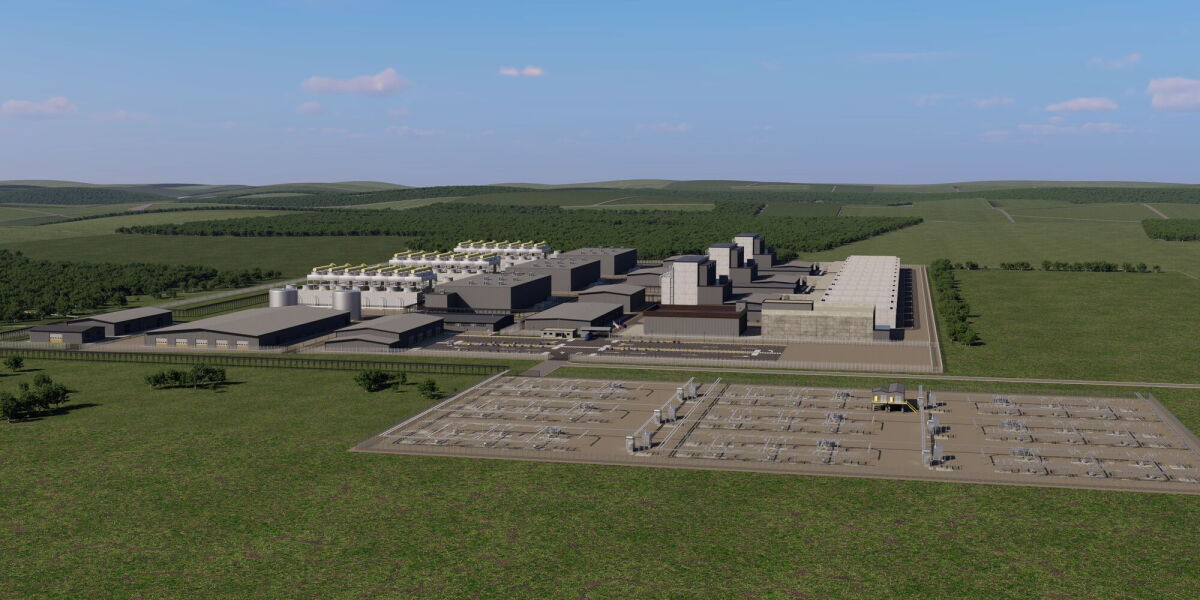
Amazon and X-energy nuclear project (image via Amazon)
Amazon backs a 960-megawatt small modular reactor plan in Indiana
Amazon, utility AEP and X-energy signed an agreement to explore building 12 of X-energy's 80-megawatt Xe-100 small modular reactors in Indiana. That's 960 MW in three groups of four, at or near AEP's retired Breed coal plant in Sullivan County. Amazon would fund development and be the first customer, buying the plant's power under a long-term contract to serve the regional grid and its data centers. AEP says that contract would cover the plant's costs to protect existing utility customers. Construction only goes ahead if the project reaches a final investment decision.
It's the second project under Amazon and X-energy's plan to add more than 5 GW of US nuclear capacity by 2039, after the Cascade facility in Washington state. The Xe-100 is a helium-cooled, high-temperature gas reactor that runs on TRISO fuel. Amazon says the Indiana project could create more than 1,000 construction jobs and over 100 permanent roles.
Source: Amazon; POWER Magazine

Microsoft Exchange Server (image via BleepingComputer)
October's Windows Server updates are knocking some Exchange servers over
Microsoft has confirmed that its October 2026 Windows Server updates can destabilize on-premises Exchange Server. Users may be unable to sign in to Outlook on the web, mail can sit in the Outbox, and busy servers can build long email queues. The cause is a new default limit of 512 simultaneous Endpoint Lookup calls for the Windows Endpoint Mapper, which Microsoft says "might not be sufficient under heavy load" for workloads like Exchange.
Rebooting helps only for a while. The real workaround is a registry setting that raises the limit. Microsoft says not to uninstall the updates, says the problem isn't caused by October's Exchange security updates, and says the impact depends on server load, so "some servers might never see a problem." Admins who were hit aren't happy. One wrote, "I spent all weekend on my servers because of this."
Source: The Register; BleepingComputer
ConnectWise (image via BleepingComputer)
ConnectWise pulls its Cloud Backup service after a breach reaches Microsoft 365 tenants
ConnectWise, which sells software to managed service providers (MSPs), says it found unauthorized access to application identities in its Cloud Backup environment (formerly SkyKick) on October 15 and suspended the service. Its SaaS Security and Cloud Management products are integrated with Cloud Backup, so they were shut down too. As of October 18, customers still couldn't back up data, open their archives or restore anything. ConnectWise says the existing archives remain encrypted and it has seen no evidence they were accessed.
Security firm Huntress paints a starker picture. It says a Microsoft 365 credential (an API secret) belonging to Cloud Backup was compromised and used to get into customers' M365 environments. BleepingComputer reports Huntress counted at least 162 compromised tenants, and Microsoft confirmed the malicious activity. Huntress warns that disabling the ConnectWise apps won't remove credentials the attackers already added. ConnectWise is asking MSPs to check the M365 environments they manage.
Source: The Register; BleepingComputer
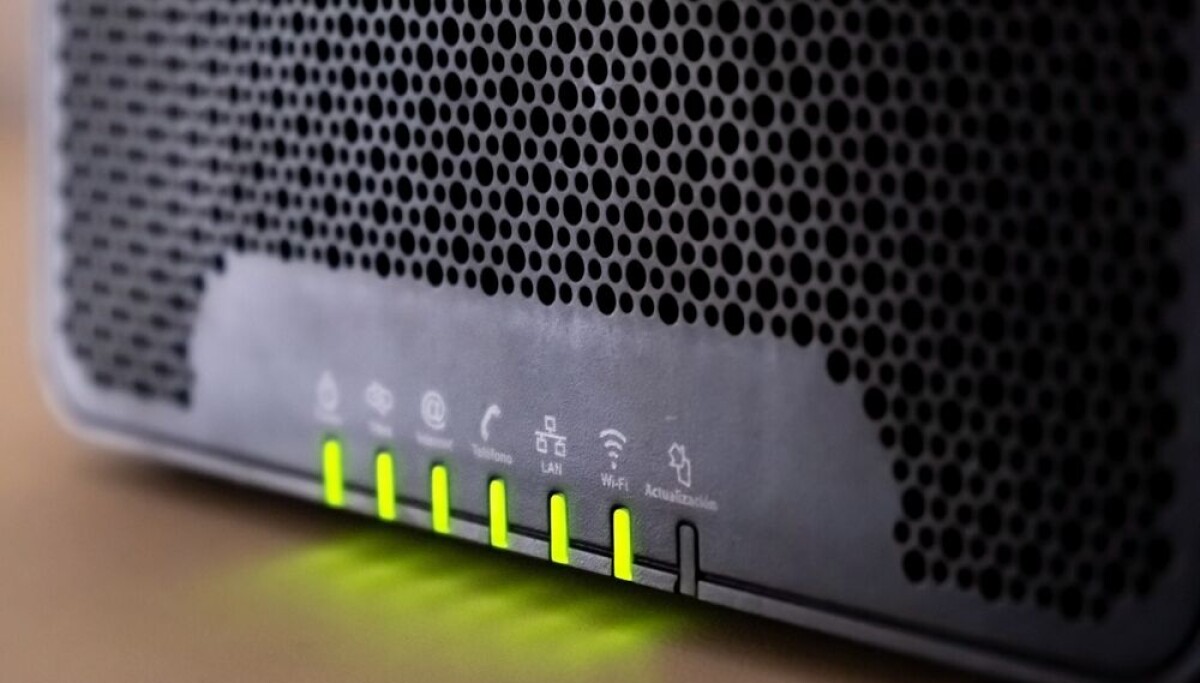
Wi-Fi router (image via The Register)
A 16-year-old Broadcom Wi-Fi bug can still let strangers hijack routers
Security researcher Quentin Kaiser disclosed "WPSplinter," two bugs in Broadcom's proprietary Wi-Fi Protected Setup (WPS) code that date back to at least 2010. Specially crafted WPS messages can corrupt a router's memory and let anyone in Wi-Fi range run their own code, without the network password and without the owner doing anything. Kaiser demonstrated it on ISP-supplied routers in Belgium. In one attack he ran code on an ASKEY gateway, pulled the Wi-Fi password from memory and used it to join the network. He roughly estimates 1.56 million affected routers in Belgium alone, and many more could be affected worldwide.
Kaiser says Broadcom knew about the problem in 2018, shipped a partial fix without disclosing it, and told manufacturers to switch to the open-source hostapd. Routers on older eCos-based chips (BCM3380, BCM3383, BCM33834) may never be fixed, which he calls a "forever day." Broadcom declined to assign a CVE. As of October 15, none of the devices he identified had been patched.
Source: The Register

F5 (image via BleepingComputer)
F5 rushes out patches for three critical NGINX flaws
F5 released out-of-band security patches for several NGINX vulnerabilities, including three rated critical. Two are in the HTTP/3 module (CVE-2026-15176 and CVE-2026-97205) and one is in the map directive (CVE-2026-93479). An unauthenticated remote attacker can crash NGINX worker processes on systems with certain non-default configurations, and may be able to run code where ASLR is disabled or can be bypassed.
Fixes are out for NGINX Plus, NGINX Open Source, Ingress Controller, Gateway Fabric and Instance Manager. If you can't patch right away, F5's mitigations include avoiding the 'alias' directive in location blocks (or the $request_filename variable), turning off asynchronous file I/O or Server Side Includes, and using named regex captures. F5 hasn't flagged any of the flaws as exploited in the wild yet.
Source: BleepingComputer

Europe (image via The Verge)
Four major European carriers team up on a satellite-to-phone bid
Deutsche Telekom, Orange, Telefónica and Vodafone signed a letter of intent to explore a joint bid for Mobile Satellite Services spectrum in Europe, which would support direct-to-device satellite service competing with SpaceX's Starlink. The four would build the ground network and the coordination and monitoring functions in Europe. They won't invest directly in satellites, though. A satellite partner that hasn't been picked yet would supply the constellation.
The carriers say the plan won't replace their existing satellite partnerships. The Verge notes that AT&T, T-Mobile and Verizon announced a similar spectrum collaboration in the US earlier this year.
Source: The Verge; Telefónica
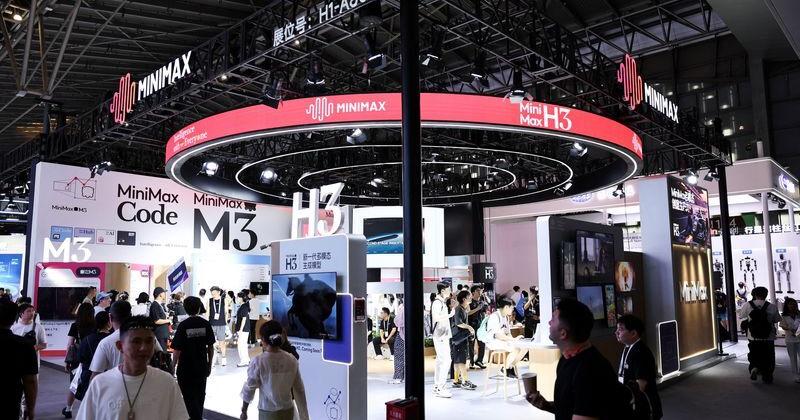
MiniMax booth at WAIC in Shanghai (image via Reuters)
MiniMax's M3.1 Flash promises nearly 3x faster inference at 70% lower cost
Chinese AI startup MiniMax released M3.1 Flash, which it says brings "generational" gains in agentic tasks, coding, computer use and cybersecurity. MiniMax says online inference is nearly three times faster and agentic usage costs are 70% lower than its predecessor. It also says "Space Bunny," an anonymous model that processed more than 200 trillion tokens, was an early version of M3.1 Flash. Pricing is $0.15 per million input tokens and $0.60 per million output tokens, and MiniMax claims 73.7% on the DeepSWE v1.1 coding benchmark.
The model is available now through MiniMax's API, M Plan and MiniMax Code. The weights will be released later, and a Pro model is also on the way.
Source: Reuters (via Lufkin Daily News); MiniMax

Jio Platforms IPO event (image via Reuters / The Star)
Jio's record IPO draws about $25 billion in anchor bids
Jio Platforms' $3.2 billion IPO drew about $25 billion in bids from institutions including GIC, BlackRock, Fidelity and the Abu Dhabi Investment Authority, two people familiar with the matter told Reuters. That's almost 30 times the portion reserved for anchor investors, who can take up to 30% of the offering. The anchor book opened Monday, and the issue opens to the public on Wednesday.
Jio, the telecom, cloud and AI arm of Reliance Industries led by Akash Ambani, has more than 500 million subscribers. A successful listing would make it one of India's four most valuable listed companies. It plans to use up to 275 billion rupees ($2.9 billion) of the net proceeds to pay down debt at its telecom unit, Reliance Jio Infocomm. It's also Reliance's first offering since 2006.
Source: Reuters (via The Star)

CXMT (image via CNBC / Getty Images)
China's CXMT forecasts a huge profit swing, but its shares fall 7.8%
ChangXin Memory Technologies (CXMT) forecast net profit of 131 billion to 132.5 billion yuan (about $19.6 billion) for January through September 2026, compared with a 5.28 billion yuan loss a year earlier, on revenue of roughly 265 billion to 270 billion yuan. The Chinese DRAM maker credits demand for AI computing, which has caused memory shortages and steep price increases. Counterpoint says CXMT took 10% of global DRAM revenue in the third quarter, up from 5% a year earlier.
Investors still sold. CXMT closed 7.8% lower on Monday, as chip stocks stayed under pressure from worries about how AI is being financed, and some experts warned of a possible chip glut in a couple of years.
Source: CNBC

Ask Google Help (image via 9to5Google)
Google's help pages are switching to Gemini-powered AI answers
Google is moving some of its support pages from full articles to AI summaries. Starting with Google Account Help, and Chrome's help topics too, links now open "Ask Google Help," which shows a condensed version of the article with troubleshooting steps and lets you type follow-up questions for Gemini. The original article is still there behind a "View Sources" button. The main help hub also leads with a chatbot instead of a list of topics.
It looks like a test on select topics for now. Pixel Help still opens to regular articles, and the Gemini help topic hasn't switched over. Google warns that the AI summaries could be inaccurate. 9to5Google says Gemini is a good fit for finding the right page, but it's less sure about replacing the articles themselves.
Source: 9to5Google

Apple Wallet (image via 9to5Mac)
GM brings Apple Wallet car keys to Cadillac, Chevrolet and GMC
GM has announced its long-awaited Apple Wallet car key rollout, which Apple first mentioned in June 2025. Cadillac, Chevrolet and GMC models will let owners store a digital key in Apple Wallet. A very limited rollout started in late September, it's expanding through October, and more vehicles follow in December. GM says support will keep coming to more vehicles over time, and owners will be notified in the What's New section of their vehicle's app when theirs gets it.
Source: 9to5Mac

London black cab (image via BBC News)
Uber gets £340 million in London black cab lawsuits thrown out
A High Court judge dismissed claims from about 13,000 London black cab drivers, who sought nearly £200 million, and from former private hire firms Kabbee and Iride, which sought about £140 million. The claimants alleged Uber misled Transport for London about how its booking system worked when it first got its London licence in 2012. Mr Justice Birt ruled the cases, filed in 2024, came too late under the six-year limit, saying the claimants could have discovered the alleged deception before 2018. The court never ruled on whether the allegations were true.
Uber, which denied the claims, said it was pleased they were thrown out at the earliest opportunity. RGL Management, which ran the cases, said it was very disappointed and is considering its options. Uber is back in court next week to challenge HM Revenue and Customs in a tax dispute worth more than £1 billion.
Source: BBC News; The Register
Comments
Post a Comment