Tech News Roundup: Alphabet Heads for Its Worst Earnings Drop Ever, ServiceNow Plunges 24%, RTX 5080 Hits $2,000 & More (Oct 29, 2026)

Alphabet (image via CNBC)
Alphabet is on track for its worst post-earnings drop ever after admitting AI Mode searches earn less than classic search, ServiceNow is having its own worst day, and Samsung posts a record 100 trillion won quarter that investors shrugged at. Plus Marvell's reported Lumentum deal, DOJ questions about Nvidia's Hugging Face buy, $2,000 RTX 5080s, a sneaky GitHub supply-chain attack, a poker-cheating hack caught by an AI agent, Apple and Google fines in South Korea, Wabi's $1.25 billion round, Alexa for Shopping upgrades, Reddit's new For You feed, Rust in systemd, Fujifilm's tape boom and a possible new dwarf planet. Here's the Lanbrew tech roundup for October 29, 2026.
Alphabet heads for its worst post-earnings drop ever as AI Mode ads lag behind classic search
Alphabet shares fell about 13% in early trading Thursday, putting the Google parent on track for its biggest post-earnings drop since it went public in 2004, CNBC reports. Search ads grew 12% to about $63 billion but still missed expectations, and Alphabet posted negative free cash flow of roughly $9 billion, far worse than the $2.7 billion analysts were braced for.
The awkward part is why. Chief business officer Philipp Schindler said search was held back partly by "lower monetization" in AI Mode, meaning Google's chatbot-style searches currently earn less than its old ten-blue-links results, The Register notes. Google is now switching on AI Mode ads worldwide to close that gap. CNBC also points out that both Alphabet and Microsoft stopped short of raising their AI spending forecasts this time, partly because outside GPU capacity they rent arrived late, which dragged down neocloud stocks like CoreWeave and Nebius.
Sources: CNBC, The Register, CNBC (capex)

ServiceNow CEO Bill McDermott (image via CNBC)
ServiceNow sinks 24% in what could be its worst day ever
ServiceNow's numbers weren't bad on paper. Revenue grew more than 20% to $4.11 billion, roughly in line with estimates, net new AI contract value jumped 65%, and it nudged up its subscription outlook for the year. But adjusted earnings came in a couple of cents short, and the stock dropped about 24% on Thursday, CNBC reports.
Investors are jumpy about the so-called "SaaSpocalypse," the fear that AI agents will eat into traditional software subscriptions. Citi's Tyler Radke said the market wanted a faster payoff from ServiceNow's new team of engineers who embed with customers to build AI tools, and that the real turn may not show up until next year.

Samsung (image via CNBC)
Samsung becomes the first tech company to top 100 trillion won in quarterly profit, and its stock still slips
Samsung Electronics just posted record revenue and profit for the fourth straight quarter, and says it's the first global tech company to clear 100 trillion won in operating profit in a single quarter. Its chip division alone made 106.5 trillion won in operating profit, powered by HBM4 memory for AI servers and demand for data center SSDs, CNBC reports.
Shares still closed about 4% lower in Seoul. eToro's Josh Gilbert summed it up: investors are so spoiled by the AI trade that a record is now "the bare minimum." He also noted that memory chips made up nearly all of Samsung's profit, so anyone holding the stock is "really holding a memory maker with a phone business attached." Samsung also announced 30 trillion won in third-quarter dividends.
Source: CNBC

Data center networking (image via SDxCentral)
Marvell is reportedly close to buying optics maker Lumentum in an AI megadeal
Marvell Technology is in advanced talks to buy Lumentum, the company that makes the lasers and optical parts that move data between AI servers, according to Bloomberg. A deal could be announced as soon as next week. Lumentum is worth around $83 billion to $89 billion and is backed by Nvidia, while Marvell is valued at about $220 billion, so this would be one of the biggest deals in AI infrastructure.
SDxCentral notes the fit: Marvell designs chips but doesn't make them, while Lumentum builds its own indium phosphide lasers, which already ship inside Nvidia's networking switches and are in short supply. Investors weren't sold right away, though. MarketWatch reports Marvell stock fell about 12% in premarket trading as Lumentum rose roughly 5%.
Sources: SDxCentral, Bloomberg Law, MarketWatch
Nvidia (image via Tom's Hardware)
The DOJ is reportedly asking questions about Nvidia's $13 billion Hugging Face deal
The US Department of Justice has been making inquiries about Nvidia's purchase of Hugging Face, Reuters reports, as summarized by Tom's Hardware. Nvidia agreed in September to buy the open-source AI model hub for almost $13 billion.
The questions reportedly focus on competition: Hugging Face is where a huge share of AI developers find, host and test models, and officials want to know how owning it could affect Nvidia's rivals. Nothing has been filed, and an inquiry isn't a formal challenge. Tom's Hardware notes Nvidia has faced similar DOJ questions about earlier deals, including its purchase of supercomputer software maker SchedMD.
Source: Tom's Hardware
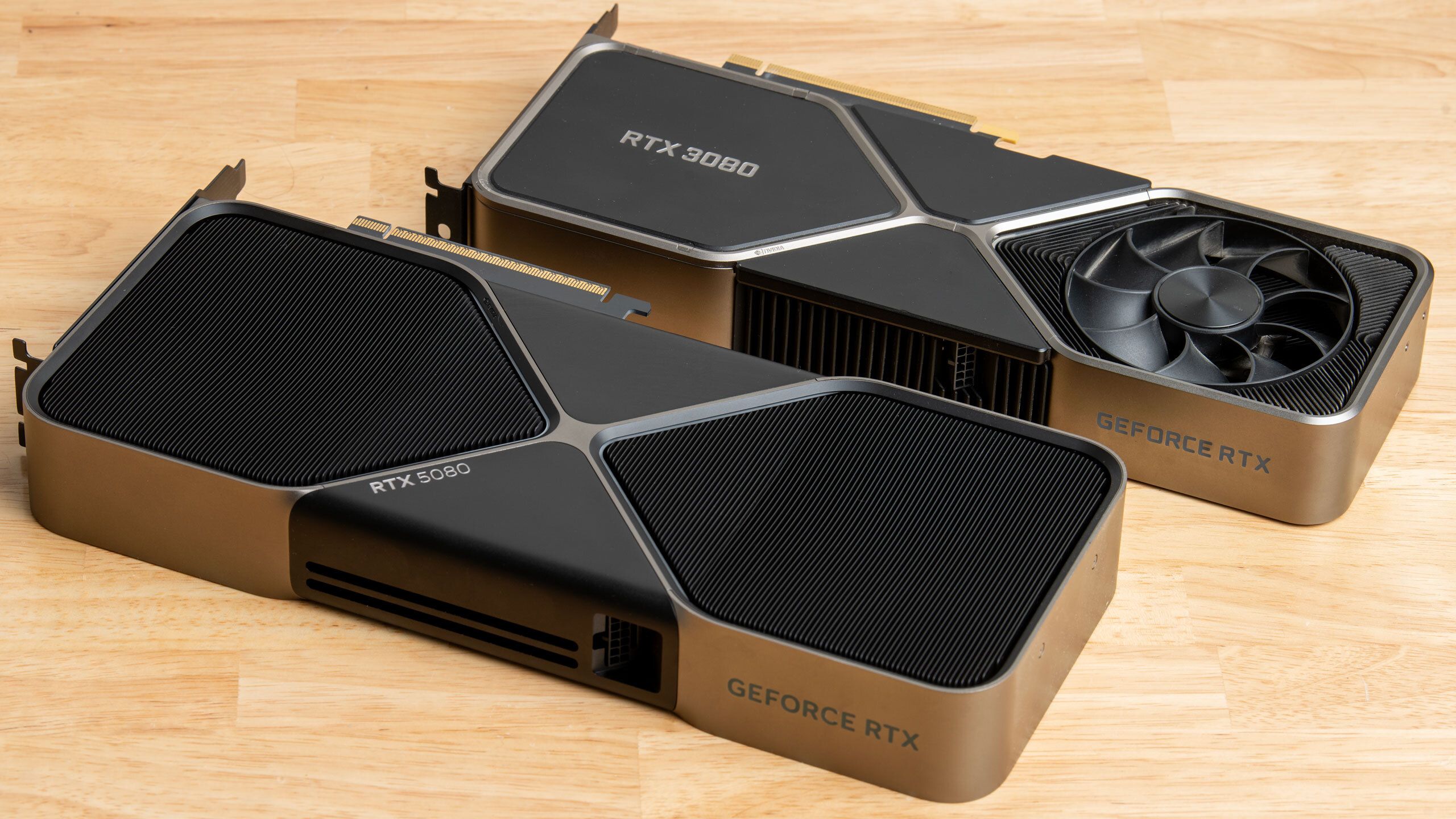
GeForce RTX 5080 (image via Tom's Hardware)
The RTX 5080 now costs $2,000, as much as the RTX 5090 was supposed to
Remember when the RTX 5080 launched at $999? Tom's Hardware found the cheapest in-stock card from a reputable store is now a PNY model at $1,999 from Best Buy, which is exactly the RTX 5090's original list price. Other listings run $2,300 for an Asus ROG Astral and close to $3,000 for a Gigabyte card from a smaller seller.
Stock is thin everywhere, and a lot of what's left comes from third-party sellers. That same PNY card averaged around $1,500 back in August, and Tom's Hardware's price tracking shows the whole RTX 50 lineup has been creeping up since launch.
Source: Tom's Hardware

Image via The Register
Attackers hid commands in GitHub issues to hit 61 open-source repos in under an hour
Radware researchers told The Register they found at least 83 attacks on 61 public GitHub repositories, including Brave browser, Trivy, MLflow and Google's LangExtract, in what looks like one coordinated campaign. Seventy-seven of the malicious posts landed within a 43-minute window on September 1, using 74 different accounts, many of which appear to have been hijacked.
The trick was sneaky: the attacker posted issues, pull requests or comments with commands tucked inside HTML comments, which don't show up on the rendered page. If a repo's automated CI workflow processed that text without care, the commands ran within about a second, with the apparent goal of stealing access tokens and then pushing poisoned code downstream.
Source: The Register

Image via Wired
A hacker allegedly spied on high-stakes poker players' screens, and an AI agent caught it
Wired has a wild one. A pro online poker player was using a Claude agent to sort through his stats when it flagged a remote-access program called MeshAgent running quietly on his PC. It had been installed months earlier, and the agent matched 11 moments when it had been capturing his screen, all during sessions on the poker site Americas Cardroom.
The player then found that the same opponent had been at his table for 10 of those 11 sessions, with a win rate that made no statistical sense. A follow-up investigation by the high-stakes community suggests hundreds of players may have been targeted over several years. He says he personally lost around $30,000.
Source: Wired

Image via Engadget
Apple and Google are fined in South Korea and told to allow outside payments
South Korea's communications regulator found that Apple and Google broke the country's Telecommunications Business Act and fined them about $32 million (Google) and $15.6 million (Apple), Engadget reports.
Both companies must now accept external payment options and revise how they review apps, and Apple has to stop treating domestic and overseas developers differently. Both already allow outside payments in the US and the EU, so South Korea is joining a growing list.

Wabi (image via TechCrunch)
Wabi, from Replika's founder, hits a $1.25 billion valuation as a personal AI agent
Wabi, the startup founded by Replika creator Eugenia Kuyda, raised $55 million at a $1.25 billion valuation, TechCrunch reports. Wabi started out letting anyone build small apps from a prompt, then pivoted last month into an AI messenger that builds the little tools you need on the fly, like a meal planner, a date-night planner or a custom trivia game.
IVP led the round, with a16z, Forerunner, Amazon's Alexa Fund and angels including Shopify's Tobi Lütke, Salesforce's Marc Benioff and Marissa Mayer joining in.
Sources: TechCrunch, Bloomberg

Alexa for Shopping (image via The Verge)
Amazon's Alexa for Shopping can now edit your lists, registries and deliveries
Amazon's AI shopping assistant, which sits next to the search bar in its app and site, can now create and edit shopping lists and gift registries, move items between them, and answer things like "show me what's left on my wedding registry," The Verge reports.
It can also update delivery instructions, explain charges and refunds you don't recognize, and pause or change recurring deliveries. The features are rolling out in the US now.
Source: The Verge

Image via 9to5Mac
Reddit adds a For You feed, but you can stick with Following
Reddit is rolling out an algorithmic For You feed that mixes posts from your communities with recommendations based on your interests, 9to5Mac reports. Reddit says it's meant to help people stumble onto subreddits and threads they wouldn't have found on their own.
If that sounds like your nightmare, there's a Following feed that shows only posts from communities you've actually joined.
Source: 9to5Mac

Image via The Register
Systemd merges Rust support, but it isn't getting rewritten
Rust is coming to systemd, the init system most Linux distros run on. Developer Christian Brauner announced that Rust support has been merged for systemd 263, starting with new keyring helper tools, The Register reports.
Before anyone panics or celebrates, there are big limits. Rust is only allowed for new "leaf" components, no existing C code is being ported, and nothing other parts depend on will be written in it. It also skips Rust's usual Cargo build tool, and everything is built with Meson like the rest of systemd.
Source: The Register

Image via Tom's Hardware
Tape isn't dead: Fujifilm will boost production 5x for the AI data boom
Fujifilm plans to spend ¥10 billion (about $63 million) expanding its tape plant in Odawara, Japan, to make up to five times as much LTO tape, The Register reports. Tom's Hardware, citing Nikkei Asia, says it's the company's biggest investment in tape in about 20 years.
The reason is AI. Training and running models piles up enormous amounts of data that needs cheap long-term storage, and tape is still the cheapest way to archive it. Fujifilm will start with LTO-10 cartridges holding 30TB or 40TB each, and Tom's Hardware says the upgrade sets it up for future tapes of up to 100TB.
Sources: The Register, Tom's Hardware

Image via Wired / NOIRLab
The Rubin Observatory may have found a new dwarf planet hiding behind the Milky Way
Astronomers at the Vera C. Rubin Observatory in Chile spotted an object called 2026 ED138 that could be a new dwarf planet, Wired reports. It's somewhere between 600 and 1,500 kilometers across and sits about 46 times farther from the sun than Earth, a bit beyond Pluto's average distance.
Harvard-Smithsonian researcher Matthew Holman flagged it on October 13, then the team found it in archived images going back to 2016. It stayed hidden for so long because it sits against the crowded, bright band of the Milky Way. The Register adds that it turned up through search code Holman helped write, and the result was so rare he first thought it was a bug.
Sources: Wired, The Register
Lanbrew rounds up the day's biggest tech stories. Every story above links to the original reporting, so click through to support the outlets doing the work.
Comments
Post a Comment