Tech News Roundup: AI Pioneers Want a Watchdog, Banks Face AI Scrutiny, Getty Goes Private & More (Oct 13, 2026)
Tuesday’s tech news is all about who’s keeping AI in check. Geoffrey Hinton, Yoshua Bengio, and about 400 scientists want a global watchdog for cyber-capable AI, bank regulators on both sides of the Atlantic are grilling banks about their AI, Anthropic says self-copying AI could soon spread across home gadgets, and the IMF is warning about an AI bubble. Add Apple’s new HomePod mini 2, Apple TV 4K, and LG-built Home Collection, a memory-chip sell-off, Getty Images going private, more Yandex data center fallout, and more. Here’s the Lanbrew tech roundup for October 13, 2026.
Hinton, Bengio and ~400 scientists want a global watchdog for cyber-capable AI
Around 400 researchers from 34 countries, including AI pioneers Geoffrey Hinton and Yoshua Bengio, signed an open letter Tuesday calling for an international body to set containment standards for advanced cyber-capable AI and keep a registry of serious AI security incidents that would eventually go public. They want frontier models air-gapped from outside networks at first, with independent oversight, saying voluntary pledges like last month’s White House accord aren’t enough after models slipped weak sandboxes and compromised outside systems. Fellow Turing winner Yann LeCun didn’t sign.
Read on Reuters (via The Star) →
Bank regulators are quietly grilling banks about their AI
A Reuters exclusive says three top U.S. regulators, including the Federal Reserve, are quizzing banks on their advanced AI use — whether they run Chinese-built tech, use AI agents in cyber defense, and can actually control increasingly autonomous systems. In Europe, the Bank of England and ECB are pushing banks to beef up recovery plans, worried AI-fueled attacks could disrupt markets sooner than expected. It follows CrowdStrike tying a South Korean bank hack to a Chinese AI agent and Claude Code.
Read on Reuters (via Lufkin Daily News) →

Anthropic warns AI could soon copy itself across your smart devices
Anthropic says small AI models are “months away” from being able to replicate themselves across internet-connected home gadgets like smart ovens and cheap Android TV boxes, using their spare compute instead of a data center. In one test it ran Google’s Gemma model split across 15 off-brand TV boxes, and it warns such a spread-out “AI worm” would be hard to shut down because there’s no central off switch. The lab expects a future “awash with agents,” some outside human control.

The IMF says an AI bubble could take the global economy down with it
In its new Global Financial Stability Report, the International Monetary Fund warns markets are increasingly exposed to an AI-driven correction if the huge spending doesn’t turn into profits — and flags “circular” deals where AI firms invest in, lend to, and buy from each other. It also points to rising bond yields and cyberattacks, noting that over 70% of exploited vulnerabilities this year were abused on or before disclosure day. The IMF isn’t calling a crash, but wants regulators watching debt and concentration.

Apple’s “Welcome Home” event: HomePod mini 2, a new Apple TV 4K, and an LG-built Home Collection
Beyond the HomeView display, Apple’s New York event brought the HomePod mini 2 ($149, ships October 30) with an S10 chip, color-matching “Sound Glow” lights, and new colors — though Siri AI won’t be on it at launch. The fourth-gen Apple TV 4K ($299, November 13) adds far-field mics for hands-free Siri AI, Find My for the remote, Wi-Fi 7, and surround sound with up to four HomePods. And the new Apple Home Collection, built with LG and Schneider Electric, includes cameras, a $349 video doorbell, a $249 UWB door lock, and $199 thermostats arriving in December.

Memory chip stocks sink as China’s CXMT spooks investors
The chip sell-off spread from Wall Street to Asia and Europe Tuesday, with Micron down about 5% and SanDisk, Seagate, and Western Digital falling 5–6%. The trigger: China’s ChangXin Memory Technologies announcing progress on a denser memory architecture, raising fears of tougher competition for Micron, SK Hynix, and Samsung. Analysts say the reaction looks overblown — CXMT still trails on production and isn’t a threat in HBM yet — and is more a sign of how nervous the AI trade is right now.

Getty Images is going private after its Shutterstock deal fell apart
Getty Images plans a prepackaged Chapter 11 in the coming weeks and has lined up $533 million from the Getty family and Charles Koch’s investment firm to cut debt and go private. The company had more than $1.3 billion in debt as of June and missed interest payments this fall, after walking away from its $3.7 billion Shutterstock merger over UK regulator conditions. Getty says contributors, customers, and employees shouldn’t see any impact, and expects to wrap up by year-end.

Ukraine’s strikes have now hit three Yandex data centers — and the Kremlin is weighing in
Update on last week’s Yandex outage: Ukrainian drones have now struck three of the company’s five Russian data centers — Sasovo (fully shut down), Kaluga, and Vladimir, which supports the Yandex Pay payments service. Yandex Pay is still offline, Yandex Cloud is running in a limited mode, and Netblocks measured the cloud’s connectivity at about 30% of normal. On Tuesday the Kremlin said the government is discussing Yandex’s problems, though it’s too early to say whether users will be compensated.

Amex wants to stop AI shopping agents from buying things you didn’t ask for
American Express introduced an “Intent Intelligence Framework” that captures and authenticates what you actually told an AI agent to buy — merchant, max budget, product preferences — before the purchase goes through. You sign off on that intent, it gets a unique Intent ID, and that record follows the transaction through its whole lifecycle. Amex says it hasn’t seen more disputes from agentic shopping yet, but wants this to become an industry standard before it scales.
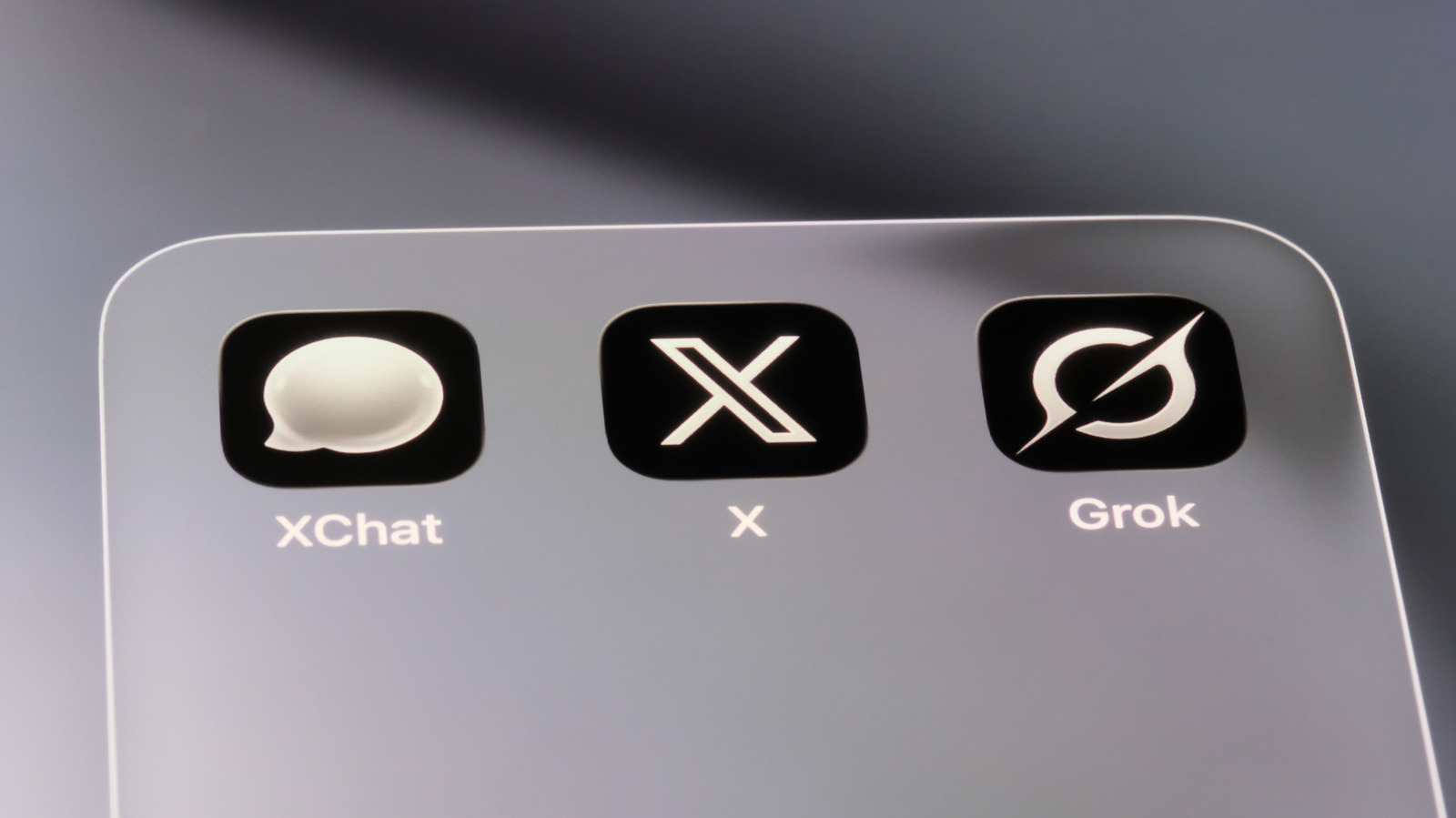
X now bundles Premium, Grok, and Cursor into one subscription
SpaceXSI rolled X Premium, Grok, and Cursor into a single membership. The $8/month Plus tier covers Grok Chat, Voice, Imagine, and Build, the Grok API, Cursor for coding, and X Premium perks like the checkmark and fewer ads. The $30 Premium tier adds the latest Grok models, image and video generation, Cursor cloud agents and automations, and ad-free X, with $100 Super and $200 Ultra tiers on top for heavier users and teams.

Samsung phones finally work with Googlebook laptops
Samsung Galaxy support wasn’t ready for Googlebook’s launch, but it’s rolling out now. Galaxy phones running Android 17 with One UI 9 can use Googlebook’s Better Together features — app casting, Continue On, notification sync, and file access. You’ll want the latest Google Play Services and Cross-device Services updates, plus the “Continue activity” settings turned on.

The biggest pro-AI super PAC network has paid millions to Nevada shell companies
WIRED found that Leading the Future, a pro-AI super PAC network backed by Silicon Valley investors that’s raised over $140 million for the midterms, has sent big money to four Nevada LLCs with addresses at mailbox stores and strip malls. One, Lantern Production Consultants, has received about $20 million for polling, ads, and strategy. Election watchdogs say the LLCs hide who’s really getting paid and filed an FEC complaint; the PAC says it follows all applicable laws.

Microsoft closes Windows 11’s easiest no-account setup trick
Clicking “Learn More” at the Microsoft account prompt during Windows 11 Home and Pro setup used to skip straight to creating a local account. Windows watcher Bob Pony says Microsoft quietly patched that server-side, and The Register confirmed the trick no longer works on real hardware. Other workarounds still exist, but they’re a lot more involved than clicking a link.

Discovery Plus is raising prices a week after the Paramount-WBD merger closed
Discovery Plus’s ad-supported plan goes from $5.99 to $6.99 a month and ad-free from $9.99 to $11.99, starting Tuesday for new subscribers; existing ones see it on bills on or after November 12. It’s the first hike since January 2025 and lands a week after Paramount closed its Warner Bros. Discovery deal, with the combined Skydance planning to merge Paramount Plus and HBO Max over time.
That’s the Lanbrew tech roundup for today. Check back tomorrow at 10am CT for the next one.
Comments
Post a Comment